
Universal Audio Apollo Twin X QUAD
4.0Editor score
Unison Preamps with Realtime Emulation
200+ UAD DSP Plug-ins
Thunderbolt 3 Connectivity
This guide compares the top ten audio interfaces with built in dsp for low latency monitoring, real time effects, and professional recording workflows across
Choosing the right audio interface is crucial for any modern musician or podcaster looking to achieve professional sound quality. Interfaces with built in dsp allow you to process audio in real time without taxing your computer's CPU, ensuring a smooth recording experience.
We have evaluated ten top rated models based on their dsp capabilities, preamp quality, connectivity options, and overall value. Each product was selected for its ability to deliver low latency monitoring and versatile effects processing for different recording scenarios.
Every pick includes detailed specifications, pros, cons, and expert insights to help you make an informed decision. Prices and availability change frequently, so be sure to verify current offers before purchasing your new recording gear.
4.0Editor score
4.7Editor score

4.6Editor score
This side by side comparison highlights the key specifications and unique features of each interface to help you quickly identify the model that fits your specific recording requirements and budget constraints.




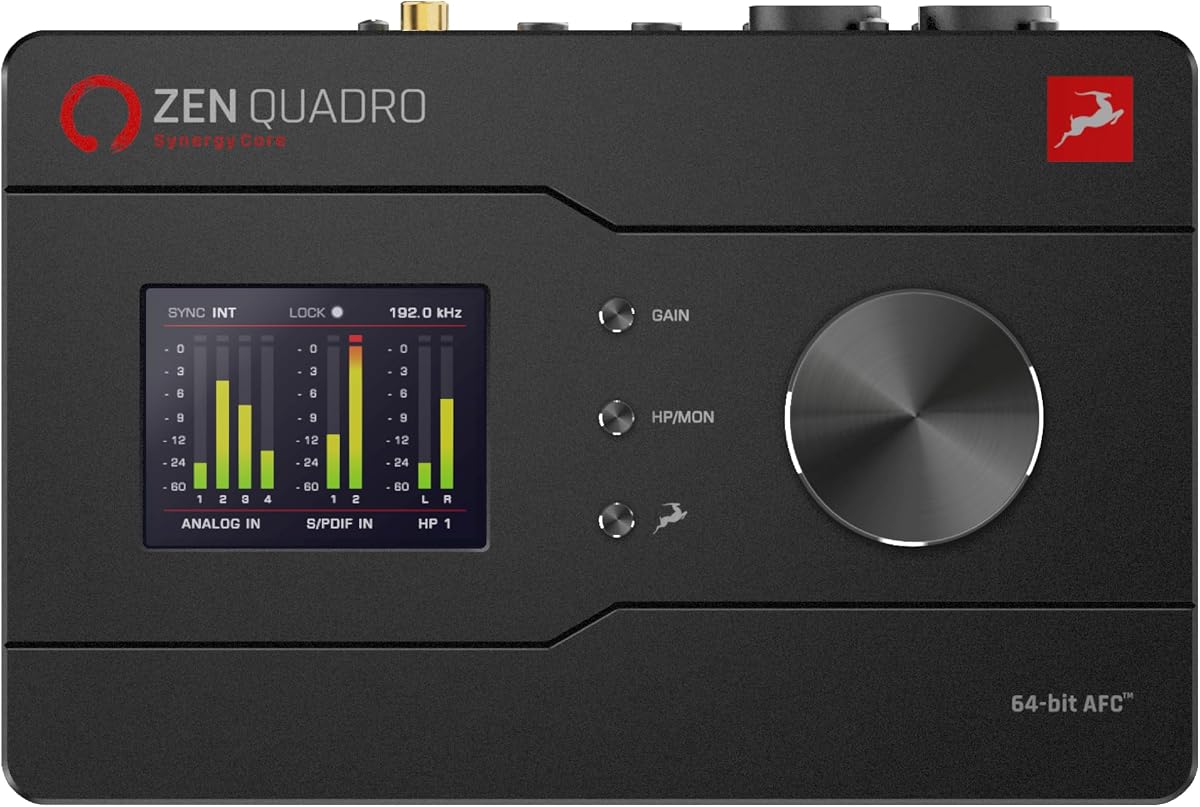
The Antelope Audio Zen Quadro stands out as a premier choice for those seeking high-performance DSP capabilities in a portable form factor. With a rating of 4.7 stars, it delivers studio-grade sound quality and real-time effects processing that rivals much larger rack units.
We may earn a commission when you buy through this link, at no additional cost to you.
Its Synergy Core architecture allows you to track through 37 included effects with 90 more available, running on dedicated DSP and FPGA hardware. This ensures near-zero latency recording and live workflows without placing any load on your host CPU. The flagship sound and clocking technology provide up to 130 dB AD/DA dynamic range.
While the price is higher than entry-level interfaces, the value is significant for professionals who need reliable DSP processing. The dual USB-C connectivity allows for flexible setups connecting to computers and tablets simultaneously, making it ideal for modern creator workflows and mobile recording sessions.
This interface is perfect for vocalists and guitarists who want to monitor with effects without latency. If you need a compact yet powerful solution for home studios or on-the-go recording, the Zen Quadro offers the best balance of portability and professional DSP performance available today.
The Synergy Core FX engine runs analog-modeled compressors, EQs, and preamps on dedicated hardware for true zero-latency monitoring.
With 14-in and 10-out capabilities including ADAT and S/PDIF, this interface grows with your studio needs.
We may earn a commission when you buy through this link, at no additional cost to you.
The Universal Audio Apollo Twin X QUAD represents the pinnacle of professional audio interfaces with built-in DSP. It offers next-generation audio conversion with the widest dynamic range and lowest distortion, making it a favorite for engineers who demand pristine sound quality.
We may earn a commission when you buy through this link, at no additional cost to you.
Its Unison preamps let you record in real time through authentic emulations of Neve, API, and Avalon gear, providing that sought-after analog tone directly at the source. Access the full library of 200+ UAD DSP and native plug-ins to shape your sound with world-class compressors and reverbs.
The Apollo Monitor Correction powered by Sonarworks ensures you mix with confidence in any room. While the cost is high, the investment pays off through the quality of recordings and the reliability of the DSP system which reduces CPU load significantly during sessions.
This unit is best suited for serious producers and mixing engineers who need high-fidelity conversion and access to industry-standard plugins. If you require a studio reference class interface with robust DSP capabilities, the QUAD model provides the power and clarity needed for professional results.
Unison preamps combine hardware impedance and software emulation for authentic tones at the source.
Access award-winning titles like Capitol Chambers and EL8 Distressor within your recording session.
We may earn a commission when you buy through this link, at no additional cost to you.
The Focusrite Scarlett Solo 4th Gen is an excellent starting point for songwriters needing big studio sound. While it relies on host processing rather than dedicated DSP chips, it offers Air mode to lift vocals and guitars with rich harmonic drive effectively simulating DSP enhancement.
We may earn a commission when you buy through this link, at no additional cost to you.
With a huge 120dB dynamic range, it uses the same converters as Focusrite flagship interfaces. The box includes industry-leading recording software and a full collection of record-making plugins, providing everything needed to start creating professional music immediately.
This interface is perfect for solo artists who prioritize sound quality and ease of use over complex routing or hardware effects. The improved Air mode and comprehensive software bundle make it a fantastic tool for home recording without breaking the bank.
Choose this if you want a reliable and simple interface that sounds great right out of the box. It is ideal for those beginning their journey in music production and want a proven platform to grow their skills and catalog.
Air mode adds musical presence and rich harmonic drive to your recordings for a polished sound.
Includes Pro Tools Intro and Ableton Live Lite alongside essential effects and instruments.
We may earn a commission when you buy through this link, at no additional cost to you.
The Elgato Wave XLR MK.2 is designed specifically for streamers and podcasters who need a simple way to enhance audio quality. It features onboard effects like a voice enhancer, compressor, and EQ managed through the Wave FX Processor which unifies DSP effects and VST plugins.
We may earn a commission when you buy through this link, at no additional cost to you.
With massive 80dB gain, it can drive any XLR microphone with loud clear amplification. Touch controls with customizable LED lighting provide instant visual feedback so you can see levels and status at a glance without looking at your screen constantly.
The Wave Link app allows for easy and powerful audio control with native integration for precise routing. This makes managing multiple audio sources seamless for live broadcasting. The ultra-low latency monitoring ensures you hear what your audience hears in real time.
If your goal is to improve the audio for your streams and videos, this interface offers the tools to do so effortlessly. It is best for creators who want a polished sound without needing complex studio equipment or extensive mixing knowledge.
The Wave FX Processor lets you chain DSP effects and VST plugins easily in one signal chain.
Customizable LED lighting helps you see audio levels and status instantly at a glance.
We may earn a commission when you buy through this link, at no additional cost to you.
The Universal Audio Apollo Twin X DUO shares the core features of the QUAD model but with a slightly lower channel count and DSP horsepower. It still offers the same authentic analog tones with Unison preamps allowing you to record through Neve and API emulations in real time.
We may earn a commission when you buy through this link, at no additional cost to you.
Access to over 200 UAD DSP and native plug-ins ensures you have a vast palette for shaping your sound. The Auto-Gain feature sets your levels across multiple inputs in seconds, helping you never miss a take due to technical setup delays.
Monitor Correction powered by Sonarworks and bass management allow you to mix with confidence using subwoofers. This unit balances cost and performance well for producers who need DSP power but do not require the maximum channel count of the QUAD version.
Choose the DUO if you want professional DSP capabilities at a slightly more accessible price point than the top-tier models. It remains a studio reference device that delivers high-quality conversion and powerful onboard processing for professional music production.
Set levels across multiple inputs in seconds to prevent clipping or low signal issues.
Add a subwoofer to your monitor setup to hear all the low-end detail in your mixes.
We may earn a commission when you buy through this link, at no additional cost to you.
The Solid State Logic 2 MKII Plus brings legendary SSL sound to modern USB-C interfaces. It features 32-Bit 192 kHz AD/DA converters and the iconic Legacy 4K Analog Enhancement to add harmonic richness to your recordings directly at the source.
We may earn a commission when you buy through this link, at no additional cost to you.
With two discrete XLR mic preamps and zero-latency monitoring, you get high-fidelity tracking without delays. It includes the SSL Production Pack Software Bundle giving you immediate access to professional tools. High-pass filters and stereo loopback make it versatile for various recording scenarios.
While it is bus-powered and compact, it does not have heavy onboard DSP like the Antelope or UA options. However the sound quality and analog enhancement features provide a unique tone that is highly valued for specific genres and styles of music.
This interface is ideal for producers who appreciate classic analog warmth in a digital workflow. If you prioritize sound character and simplicity with robust converters, the SSL 2 MKII Plus is a strong contender for home studios and small project setups.
Adds classic SSL harmonic richness and EQ to tracks for a polished vintage sound.
Includes Production Pack software to start creating and mixing music right away.
We may earn a commission when you buy through this link, at no additional cost to you.
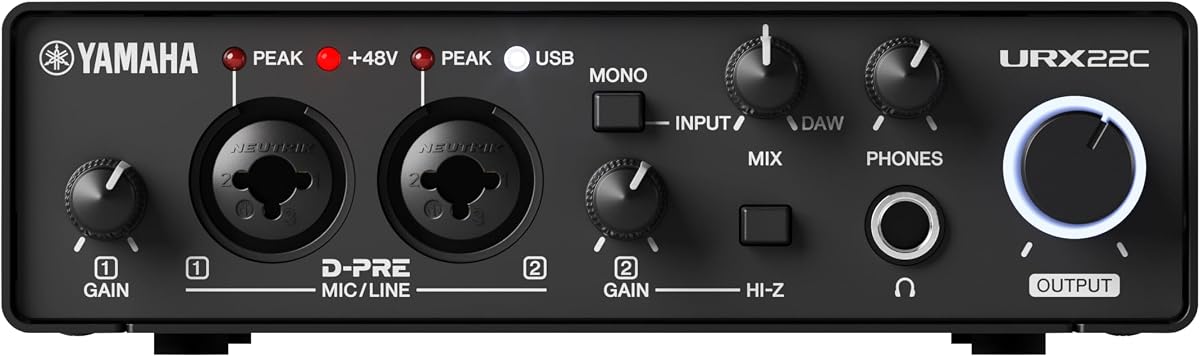
The Yamaha URX22C offers latency-free DSP-powered monitoring which is essential for recording clean takes without delay. It features Class-A D-PRE mic preamps known for their clean sound and reliability. The interface includes REV-X reverb and Channel Strip effects for rich mixing.
We may earn a commission when you buy through this link, at no additional cost to you.
With 32-bit and 192kHz support over USB 3.0, it delivers high-resolution audio quality. The rugged full-metal housing ensures durability for both studio and live environments. Steinberg software suite like Cubase AI and dspMixFx application make it a complete solution.
Cross-platform compatibility allows you to use this interface on Windows macOS and iOS systems seamlessly. The included software suite is designed to work closely with the hardware, optimizing performance and providing necessary tools for production tasks.
This unit is great for musicians who need a durable interface with reliable DSP monitoring. If you want a simple yet effective solution with solid build quality and integrated software, the URX22C is a reliable choice for home recording and MIDI work.
REV-X reverb and Channel Strip effects run on DSP for latency-free monitoring while recording.
Class-A D-PRE preamps provide high-quality gain with minimal noise and coloration.
We may earn a commission when you buy through this link, at no additional cost to you.
The MOTU UltraLite-mk5 provides extensive connectivity with 18 inputs and 22 outputs suitable for larger sessions. It features a 125 dB dynamic range and ultra-low latency optimized drivers for rock-solid performance. DSP-driven monitor mixing lets you create separate mixes for different outputs easily.
We may earn a commission when you buy through this link, at no additional cost to you.
On-board effects include reverb and dynamics processing to apply to inputs and bus mixes. The high-resolution OLED display allows you to view all signal activity at a glance without needing to open software windows constantly. CueMix 5 app offers universal control across devices.
Performer Lite software is included with over 100 instruments and effects to start making music immediately. Universal connectivity ensures compatibility with Mac Windows and iOS using standard USB protocols. This versatility makes it a favorite among session musicians who need multiple inputs.
Choose this interface if you need to record multiple instruments simultaneously without complex routing. The combination of high channel count DSP mixing and OLED metering makes it a powerful tool for full band recordings and advanced studio workflows.
Create unique mixes for each output pair using DSP-driven CueMix for flexible monitoring.
View all signal activity at a glance with detailed metering for all analog I/O.
We may earn a commission when you buy through this link, at no additional cost to you.
The Yamaha URX22 features a 4.3 touchscreen and 5 control knobs offering intuitive control over your audio setup. It supports 32-bit and 192 kHz audio over dual USB-C ports for flexible connections. Built-in DSP processor ensures professional sound and latency-free monitoring for your tracks.
We may earn a commission when you buy through this link, at no additional cost to you.
Includes Cubase Al, WaveLab Cast, and Basic FX Suite to provide a comprehensive software ecosystem for recording and broadcasting. Premium microphone preamps with 78 dB gain range offer strong amplification for various mic types. Multi-stream audio drivers allow simultaneous routing to multiple applications.
The touchscreen interface simplifies complex routing tasks that usually require deep software knowledge. This makes it accessible for creators who want powerful features without relying entirely on computer-based control panels. It is well suited for podcasting and streaming workflows.
Consider this model if you want visual control and robust DSP in a compact unit. The combination of touchscreen convenience and software bundle makes it an innovative choice for those seeking a modern and efficient audio interface experience.
A 4.3 touchscreen allows you to adjust controls and see status visually and easily.
Dual USB-C ports enable connections to multiple devices or streaming to different apps.
We may earn a commission when you buy through this link, at no additional cost to you.
The Antelope Audio Zenith 2 is a plug-and-play USB-C audio interface optimized for streaming and podcasting. It features onboard DSP to record and monitor through effects in real time for zero lag recording. The Smart Vocal Chain transforms your voice with compression and de-essing directly.
We may earn a commission when you buy through this link, at no additional cost to you.
World-class audio clarity comes from industry-leading 123 dB conversion and discrete preamps. Dual independent headphone mixes allow multiple users to monitor separately during sessions. It is also a complete virtual guitar interface with zero latency effects for authentic tones.
Software control panel offers full control via PC or Mac but the device works standalone for convenience. The vibrant display and sliders make navigation intuitive. It includes Bitwig Studio Essentials and Lifeline Lite to start creating immediately without extra costs.
This interface is ideal for streamers and content creators who need high quality audio without complex setups. If you want a portable unit with powerful DSP effects and virtual guitar rig capabilities, the Zenith 2 delivers professional results out of the box.
Transform your voice with dedicated DSP effects for polished live streams and interviews.
Stop fighting CPU load with onboard DSP for real time effects and monitoring.
We may earn a commission when you buy through this link, at no additional cost to you.
Selecting the right interface requires understanding key technical factors and your specific recording needs to ensure you get the best performance for your money.
DSP processing power is critical for running effects in real time without latency. Interfaces with dedicated DSP chips or FPGA hardware allow you to apply compression reverb and EQ while recording so you hear the final sound immediately. This offloads your computer CPU and ensures a smooth workflow.
Look for interfaces that advertise near-zero latency and include a rich library of DSP effects for monitoring.
The number of inputs and outputs determines how many instruments or microphones you can record at once. Consider whether you need just one or two inputs for vocals or a multi-channel setup for full bands. Expandability via ADAT or S/PDIF can also future-proof your studio.
Ensure the interface has enough physical connections to match your typical session setup without requiring extra hardware.
High-quality preamps ensure clean gain and minimal noise when recording from microphones or guitars. Features like Air mode or Discrete preamps enhance the sound directly at the source. Good preamps are essential for capturing the nuance of vocals and acoustic instruments accurately.
Prioritize interfaces with rated preamps and sufficient gain range for demanding microphones.
Connectivity options like USB-C Thunderbolt or traditional USB determine how fast data moves and how compatible the interface is with your system. USB-C is widely adopted and convenient while Thunderbolt offers faster speeds for high channel counts. Bus-powered interfaces are more portable.
Choose a connectivity type that matches your computer ports and portability needs.
The accompanying software bundle adds value by providing DAWs plugins and mixing tools right out of the box. Some brands offer extensive plugin libraries that run on their DSP architecture allowing deep integration. A good ecosystem simplifies the learning curve.
Check what software is included and whether it supports your operating system before buying.
A sturdy chassis ensures longevity especially if you plan to move the interface between locations. Metal housings and reliable knobs or touchscreens prevent wear over time. Quality construction also helps shield the internal electronics from interference and physical damage.
Invest in a unit with robust build quality to withstand regular use and transport.
Budget considerations should balance cost with features. High-end interfaces offer more DSP power and channels while entry-level models provide essential tools for beginners. Value is often found in units that include comprehensive software bundles.
Set a clear budget and prioritize features that matter most to your workflow.
Connect your interface to your computer using the appropriate cable and install the latest drivers provided by the manufacturer. This ensures optimal performance and compatibility with your DAW and monitoring software.
Adjust input levels using the gain knobs to prevent clipping while ensuring a strong signal. Use the DSP controls to enable monitoring effects like reverb or compression if needed for your recording process.
Keep your interface clean by wiping it with a dry soft cloth regularly and store it in a cool dry place when not in use. Avoid exposing it to extreme temperatures or moisture to preserve its functionality.
Built-in DSP stands for Digital Signal Processing which allows the interface to process audio effects like reverb or compression internally. This means you can hear effects in real time while recording without your computer CPU working harder.
Not necessarily. Since DSP interfaces handle effects processing internally, they reduce the load on your computer. This allows even modest computers to run heavy plugins and effects without latency or slowdowns during recording.
Yes many interfaces like the Elgato Wave XLR and Antelope Zenith 2 are designed for streaming. They offer features like loopback and built-in mixing tools that help capture both microphone and computer audio seamlessly for live broadcasts.
Thunderbolt interfaces typically offer faster data transfer speeds which allows for more simultaneous tracks and lower latency. USB-C interfaces are also excellent and widely compatible making them a great choice for most home studio needs.
Latency-free monitoring means you hear your voice or instrument instantly through your headphones while recording. This is critical for staying in time and performing confidently and DSP interfaces provide this by processing audio locally.
Most of the interfaces reviewed come with software bundles including DAWs and plugins. This helps you start recording and mixing right away without needing to purchase additional tools separately from third-party developers.
Many professional interfaces offer ADAT or S/PDIF expansion allowing you to add more channels through external preamps. This scalability ensures your system can grow as your recording needs become more complex over time.
The Focusrite Scarlett Solo 4th Gen is excellent for beginners due to its simplicity and included software. It provides studio-quality sound without overwhelming controls making it easy to learn and grow into production over time.
The Antelope Audio Zen Quadro Universal Audio Apollo Twin X QUAD and Focusrite Scarlett Solo 4th Gen stand out as top picks for different needs. Each offers unique strengths from advanced DSP capabilities to affordable entry-level performance.
Prioritize what matters most to your workflow such as input count DSP processing power or software bundles. A clear understanding of your goals helps you avoid overspending on features you may not use.
Remember that prices and availability change frequently so always check the latest offers before purchasing. We hope this guide helps you find the perfect interface to elevate your recordings.