
HiLetgo W5500 SPI to LAN Ethernet Network Module
4.3Editor score
3.3V external power supply
TTL level SPI interface
TCP IP STM32 Interface
This comprehensive guide compares the top Arduino Lan Ethernet Module options available in October 2026, helping you choose the right network shield for your
Choosing the right Arduino Lan Ethernet Module is crucial for any project that requires reliable wired connectivity. Whether you are building a smart home device or an industrial sensor network, stability matters. The right module ensures your data gets sent and received without interruption or signal loss during operation.
We evaluated ten top-rated modules based on compatibility, speed, and ease of integration with common boards. Our analysis focuses on how well each product supports TCP/IP stacks and handles power requirements. This list covers the full range from basic SPI interfaces to advanced multi-socket support options.
Each pick highlights specific strengths like voltage tolerance or onboard memory for buffering data packets effectively. Keep in mind that pricing can fluctuate based on demand and availability on retailer platforms. Always verify the latest specifications before finalizing your purchase to ensure project success.
4.3Editor score

4.2Editor score

4.3Editor score
This side-by-side comparison helps you quickly identify the key specifications and capabilities of each Ethernet module listed in our guide. We focus on the core hardware features that directly impact your project performance and integration ease.



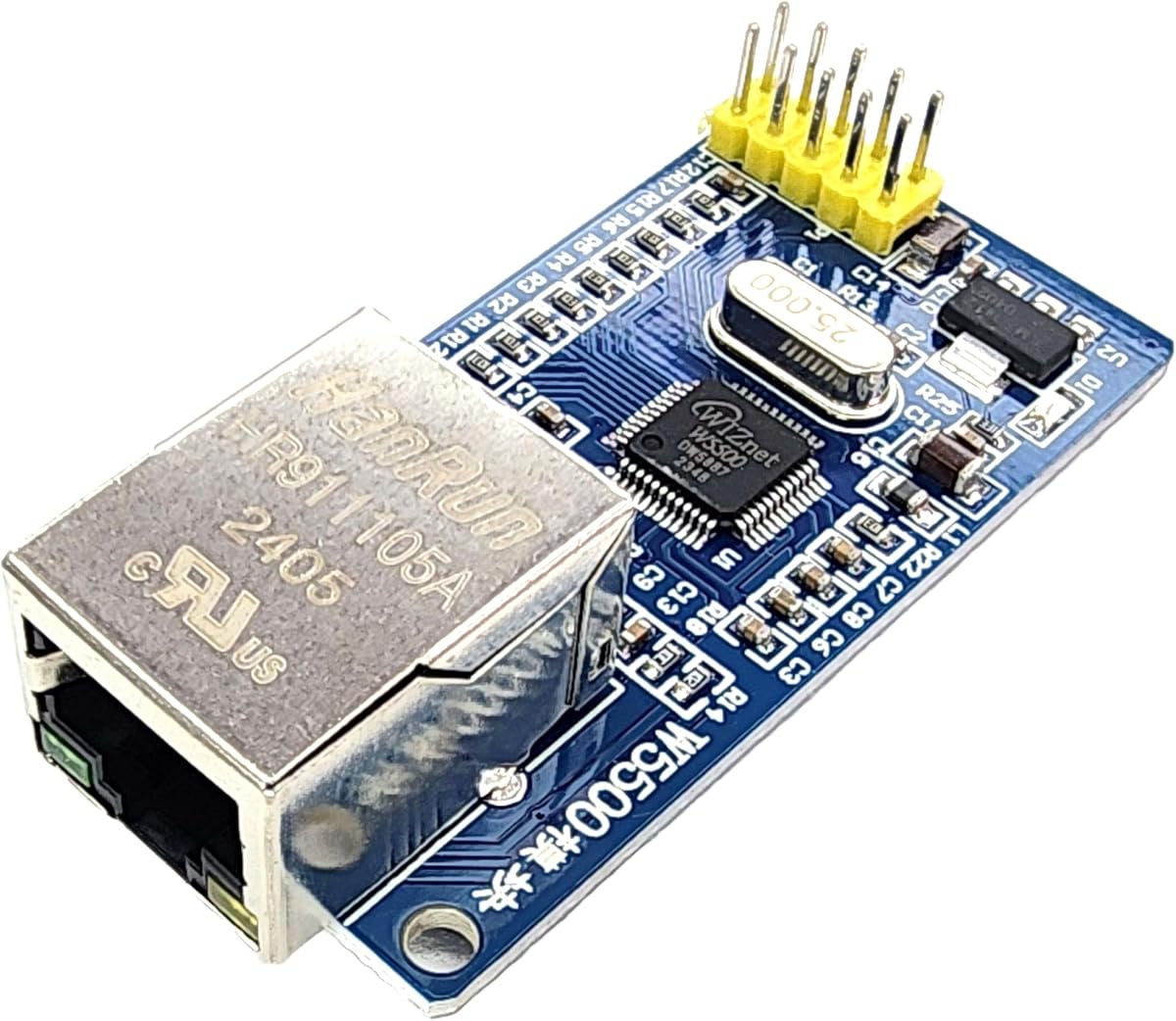

This module stands out as a top choice for developers needing reliable wired connectivity. With a 4.2 rating, it balances performance and cost effectively. The W5500 chipset offers significant advantages over older solutions like the W5100.
We may earn a commission when you buy through this link, at no additional cost to you.
Its internal 32K bytes memory provides ample buffering for TCP and RX operations. This feature is critical for projects handling high data throughput or large packets. The support for eight independent sockets allows multiple connections simultaneously without complex multiplexing.
Users should note the power requirements are specific. A stable 3.3V or 5V supply is necessary to maintain signal integrity. While the SPI interface is fast, ensuring proper pull-up resistors are used can prevent communication errors.
Buyers seeking a robust solution for industrial or hobbyist networks should consider this option. It supports Wake on LAN over UDP, which is useful for remote management. The 2-pack value adds flexibility for testing or deploying multiple units.
The SPI interface allows for rapid data transfer rates suitable for real-time control scenarios.
This feature enables devices to be powered on remotely via specific network packets.
We may earn a commission when you buy through this link, at no additional cost to you.
For those watching the budget, this module offers excellent value without sacrificing core performance. The 4.3 rating reflects user satisfaction with its stability. It uses the modern W5500 controller which is faster than legacy chips.
We may earn a commission when you buy through this link, at no additional cost to you.
The external power supply mode ensures that the module can draw enough current for consistent operation. This design choice helps prevent voltage drops that might occur with weaker onboard regulators. The TTL level SPI interface simplifies wiring for most microcontrollers.
While it lacks the multi-pack option of some competitors, the single unit is perfect for prototyping. Users should ensure their power source can deliver at least 200mA. This prevents issues during high network activity periods.
This is an ideal entry point for beginners exploring Ethernet capabilities. It fits well with Arduino and STM32 boards. The combination of price and performance makes it a highly recommended choice for cost-sensitive projects.
Using standard TTL levels makes connecting to popular microcontrollers straightforward.
Dedicated power input ensures the module stays stable under load.
We may earn a commission when you buy through this link, at no additional cost to you.
This 5-pack offers a premium experience for users planning larger deployments or testing multiple scenarios. The 4.3 rating indicates consistent quality across the units. It maintains the advantages of the W5500 architecture.
We may earn a commission when you buy through this link, at no additional cost to you.
The PCB size is optimized for space-constrained designs. Its dimensions are compact yet robust enough to hold necessary isolation components. Ensuring a continuous and stable 3.3V supply is key to performance here.
While the upfront cost is higher than single units, the cost per module drops significantly. This makes it economical for production runs or classroom setups. The SPI interface remains standard for easy integration.
Those needing reliability and quantity will find this package ideal. The emphasis on power stability suggests high build quality. It is suitable for projects requiring multiple connected devices or long-term use.
Small dimensions allow for fitting into tight enclosures or custom boards.
Buying five at once lowers the average cost per unit significantly.
We may earn a commission when you buy through this link, at no additional cost to you.
This module features a fully integrated TCP/IP stack which simplifies software overhead. It manages 8 simultaneous sockets which is great for server applications. The hardware offloads networking tasks from the main microcontroller.
We may earn a commission when you buy through this link, at no additional cost to you.
The industrial-grade PHY supports auto-negotiation for speed and duplex settings. This ensures compatibility with various router ports without manual configuration. SPI Mode 0/3 support offers flexibility in timing requirements.
Despite the feature set, the low rating suggests potential inconsistency in stock. Users might need to verify quality before large purchases. The dual voltage operation covers both 3.3V and 5V logic levels.
For those needing specific hardware features like PPPoE support, this module offers a robust solution. It is best for users comfortable troubleshooting potential hardware variances. The wake on LAN feature adds utility for remote devices.
Having the protocol stack on the chip reduces code complexity on the microcontroller.
Designed for reliability in environments where standard parts might fail.
We may earn a commission when you buy through this link, at no additional cost to you.
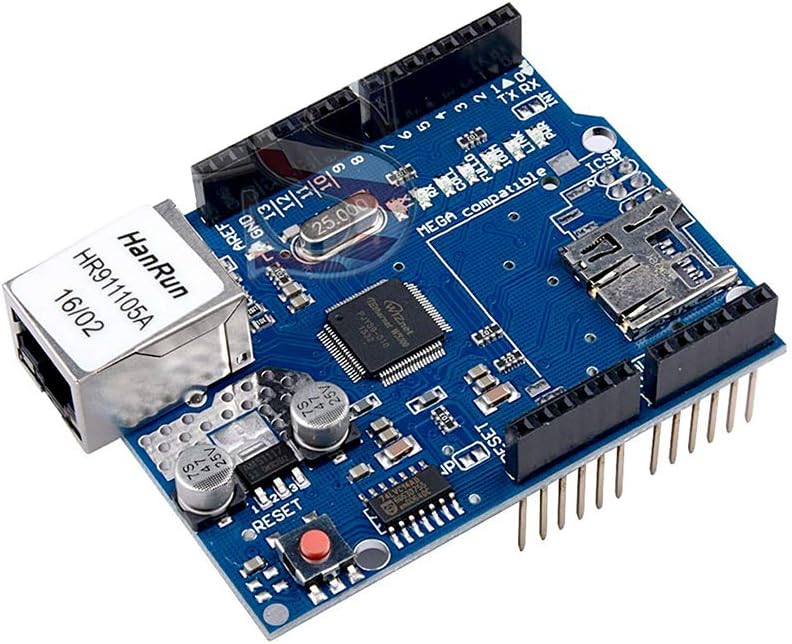
This shield uses the reliable W5100 chip which has been a staple for years. The inclusion of an SD card slot is a unique feature for data logging. It connects directly to UNO or MEGA boards via headers.
We may earn a commission when you buy through this link, at no additional cost to you.
The network stack supports both TCP and UDP protocols effectively. This allows for web servers or client connections. The RJ45 jack is standard, making cable changes simple and universal.
While not as fast as the W5500, it is sufficient for many basic tasks. Users should note the power consumption might be higher than SPI modules. It is a great choice for simple web interfaces.
Ideal for projects needing local storage alongside internet access. It simplifies wiring by combining shield functions. Beginners will appreciate the straightforward integration process without complex libraries.
Built-in SD slot lets you log data locally while connected to the network.
A tried and tested chip known for broad library support and ease of use.
We may earn a commission when you buy through this link, at no additional cost to you.
The ENC28J60 is known for its low power consumption which suits battery projects. It includes a HR911105A isolation transformer for safety and signal quality. The 25MHZ crystal ensures stable clocking for SPI transfers.
We may earn a commission when you buy through this link, at no additional cost to you.
Operating at 3.3V means it is safe for low voltage logic boards like the ESP32. This makes it a versatile option for mixed voltage systems. It supports standard SPI protocols which are widely documented.
Data rates are lower than newer chips but adequate for simple sensor reads. Users should be aware of the memory limits when handling large data sets. It is best for simple web clients or ping tools.
Choose this for battery powered devices where every milliwatt counts. The isolation transformer protects your microcontroller from network surges. It remains a solid choice for cost constrained basic networking.
Designed to use minimal energy making it perfect for battery projects.
HR911105A component provides safety and protects sensitive circuitry.
We may earn a commission when you buy through this link, at no additional cost to you.
This 5 pack receives high marks for reliability and value. The 4.7 rating suggests strong user confidence in its performance. It maintains the low power benefits of the ENC28J60 chip.
We may earn a commission when you buy through this link, at no additional cost to you.
Compliance with IEEE 802.3 ensures it meets standard Ethernet protocols. This helps avoid connection issues with modern routers. The HR911105A isolation adds a layer of physical protection.
Buying in bulk is great for educators or workshops. It reduces the per unit cost significantly. The SPI interface is standard but requires careful wiring to match pins correctly.
Ideal for groups needing multiple basic network connections. It works well with AVR and PIC microcontrollers. This is a reliable choice for simple IoT sensors.
Adheres to standard protocols ensuring broad compatibility with networks.
Five modules in one package lower the price for multiple projects.
We may earn a commission when you buy through this link, at no additional cost to you.
Achieving a perfect 5.0 rating shows high user satisfaction. It features a full size RJ45 port which simplifies physical connections. Compatibility with ESP32 and ESP8266 makes it versatile for WiFi alternatives.
We may earn a commission when you buy through this link, at no additional cost to you.
The module provides stable TCP and UDP connectivity. This is essential for real time data streaming. Tutorials are readily available to help beginners get started quickly.
Its simplicity is its biggest strength. It avoids complex setup steps common in industrial gear. The 5V/3.3V tolerance ensures it works with most standard logic boards.
Recommended for those who want a hassle free setup. It is ideal for smart home projects. The full size port ensures you can use standard cables without adapters.
Standard port size means you can use any off the shelf ethernet cable.
Works seamlessly with ESP32 which is popular for IoT development.
We may earn a commission when you buy through this link, at no additional cost to you.
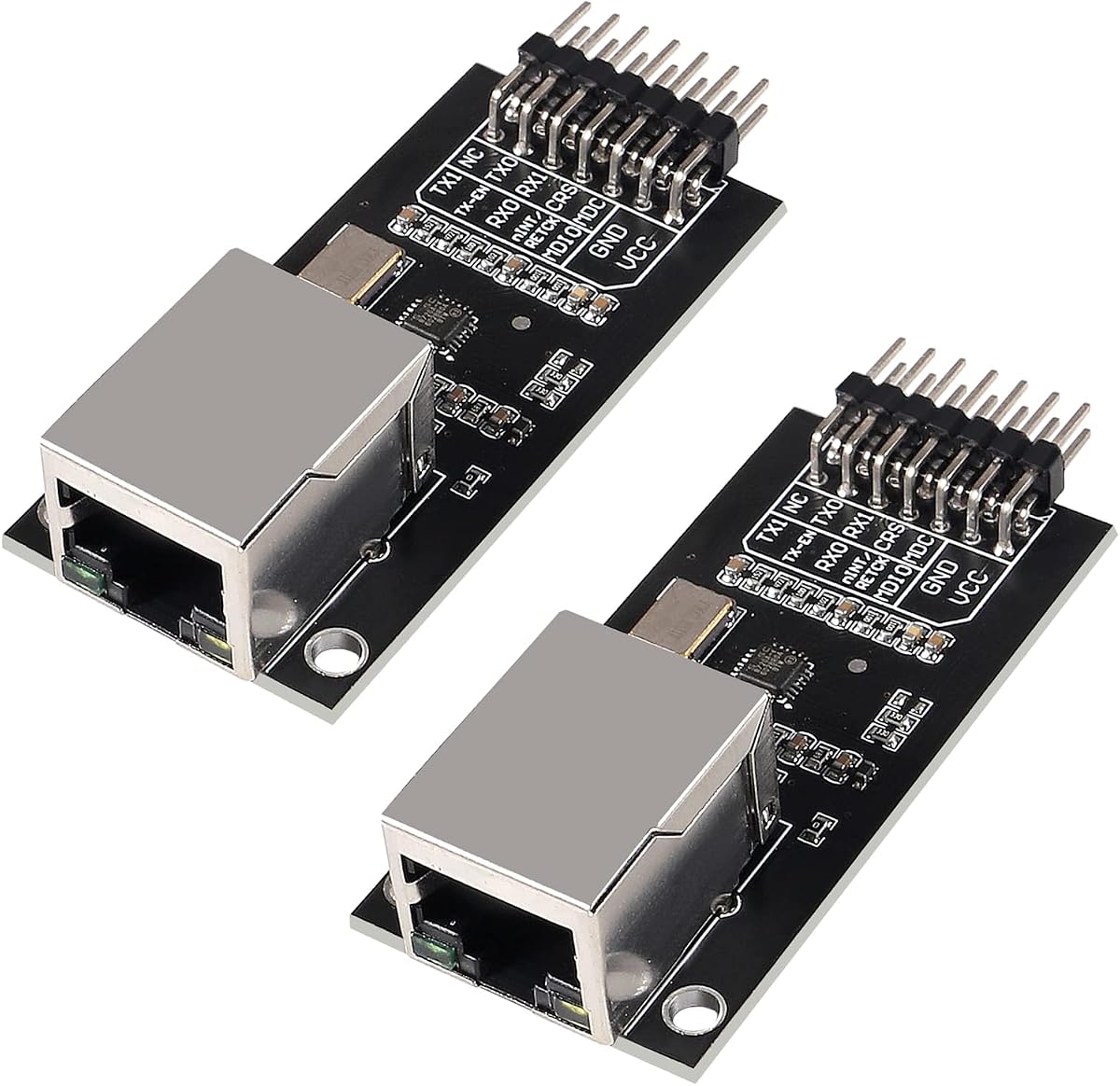
This module is a transceiver that pairs with an external MAC. It supports Auto-MDIX which means it handles cable detection automatically. This is a performance upgrade for custom designs.
We may earn a commission when you buy through this link, at no additional cost to you.
It is designed for embedded web servers requiring stable connections. The flexible power management allows operation from a single 3.3V supply. IO voltage range is wide supporting various signal levels.
Integration is more complex than plug and play shields. You need to ensure your microcontroller handles the MAC layer. This makes it better for advanced users or custom PCBs.
Suitable for custom embedded systems needing high performance. The 2-pack offers flexibility for dual network ports. It is a choice for those designing their own board layout.
Automatically detects cable types so you do not need crossover cables.
Engineered to reduce power draw during data transmission.
We may earn a commission when you buy through this link, at no additional cost to you.
This module maintains a high rating for reliable operation in various setups. It features the same stable clock crystal as other variants. The HR911105A isolation adds physical safety for the circuit.
We may earn a commission when you buy through this link, at no additional cost to you.
It supports AVR and STM32 which covers most hobbyist boards. The SPI interface is standard making it easy to wire. It is a solid budget option for general network tasks.
Users should consider power consumption for battery applications. It is low but not zero. It fits well into standard breadboard layouts for prototyping.
Choose this for simple and robust network links. It is great for testing before moving to custom designs. The price point makes it accessible for beginners.
Isolates your board from electrical noise or surges from the network.
Supports multiple microcontroller families including AVR and STM32.
We may earn a commission when you buy through this link, at no additional cost to you.
Selecting the right module depends on your specific voltage speed and power needs. Here are the key factors to consider.
Modern chips like the W5500 offer faster speeds and more sockets than older ones like the ENC28J60. Look for higher throughput if your project handles large data. This affects how quickly your device responds to requests.
Choose a modern chipset for performance projects.
Modules often need stable 3.3V or 5V power. If using batteries, consider low power chips. Ensure your power source matches the module to avoid crashes.
Always check the voltage needs before buying.
Most use SPI interfaces which are common on Arduino boards. Ensure your board has enough SPI pins. Wiring should be clean to prevent signal loss over distance.
Verify the interface matches your board type.
Some modules support multiple simultaneous connections. If running a server or multiple clients, ensure the socket count is sufficient. This prevents bottlenecks in high usage scenarios.
Check socket numbers for complex apps.
Modules that handle 3.3V and 5V logic are more versatile. This allows easier connection to different microcontrollers. Avoid voltage mismatches that could damage the board.
Look for dual voltage options for flexibility.
Some options come in packs of two or five. This can lower the cost per unit significantly. Consider buying in bulk for larger projects or testing setups.
Bulk packs often offer better value.
Good modules include isolation transformers like the HR911105A. This protects your microcontroller from power surges. It ensures long term reliability for network connections.
Ensure isolation is present for safety.
Connect the module securely to your microcontroller using standard SPI pins. Ensure the ground wires are connected to a common point for stability. Use jumper wires to link the power supply correctly.
Verify the power source is stable and matches the module voltage. A sudden drop might cause connection loss. Keep the module away from heavy electrical interference for consistent performance.
Update your libraries to the latest versions for best support. Test the connection with a simple ping script first. If issues arise check cable connections and reset the board.
The W5500 is newer and faster with more simultaneous sockets than the W5100. It often has better memory buffers for TCP handling. The W5500 also supports SPI speeds that are higher than the W5100 for better throughput.
Yes many of these modules support ESP32 and ESP8266 due to their SPI and voltage compatibility. Ensure you match the voltage levels like 3.3V to avoid damage. Always check the specific product listing for confirmed support.
Some modules need an external power supply to ensure stability especially under load. While USB might power low traffic tasks a dedicated source is safer. Check the power requirements listed in the product specs.
Wire the MOSI MISO and SCK pins to the SPI headers on your board. Connect the power and ground pins to the 5V and GND rails. Ensure the Chip Select pin is properly defined in your code.
Industrial grade modules with specific PHY chips are best for harsh conditions. Look for features like auto-negotiation and wide voltage ranges. Standard hobby modules might need protection against noise or heat.
Common causes include wrong IP settings or unstable power. Verify your code has the correct MAC address and gateway. Check that the RJ45 cable is functioning with a router or switch.
We have reviewed ten modules ranging from budget-friendly to premium options. The W5500 based models lead in performance and socket support. The ENC28J60 options remain viable for low power simple tasks.
Prioritize voltage stability and chipset speed when selecting a module. For most users the HiLetgo options offer a great balance of cost and features. Always check the power needs for your specific microcontroller.
Prices and availability change often on retailer platforms. Verify the latest specs before finalizing your purchase. With the right module your project will have reliable wired connectivity.