This guide compares the top 10 Arduino ADC boards for precision sensor reading, data acquisition, and embedded projects to help you choose the right module.
As an Amazon Associate we earn from qualifying purchases. We may earn a commission when you buy through links on this page, at no additional cost to you. Read our affiliate disclosure.As an Amazon Associate we earn from qualifying purchases.Purchases through our links may earn us a commission, at no extra cost to you. Read our affiliate disclosure.
Arduino boards lack native analog input precision for many sensors. An external ADC board solves this by converting voltage signals into digital data accurately. These modules expand your project capabilities significantly.
We evaluated ten top rated ADC modules based on resolution, channel count, communication protocols, and build quality. Our analysis focuses on real world usability for hobbyists and engineers alike.
Each pick highlights key strengths and ideal use cases for different project needs. Prices fluctuate so verify current offers before purchasing to ensure you get the best value.
Top 3 Picks for Best Arduino ADC Board
Best Budget
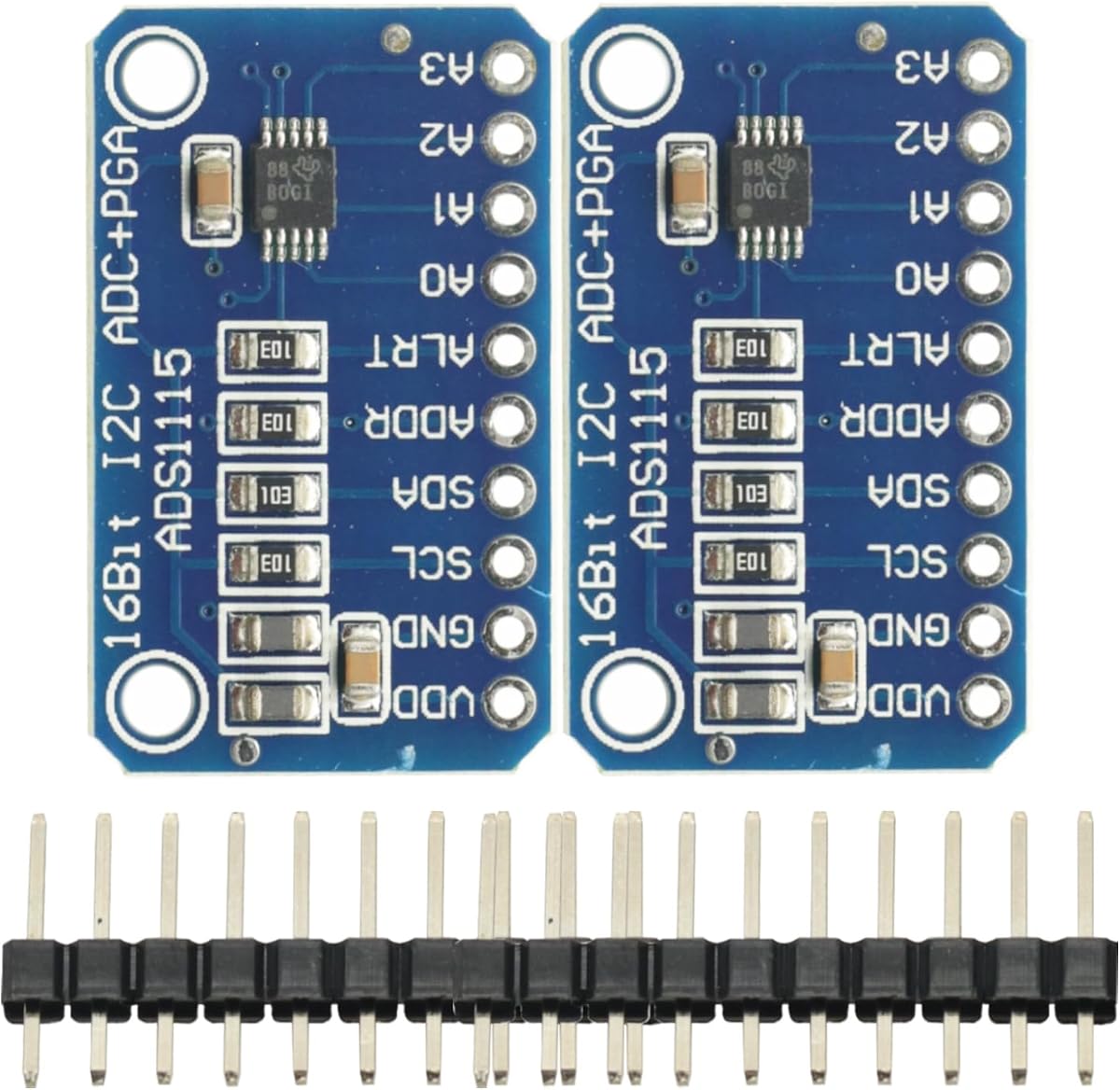
2Pcs ADS1115 16 Bit I2C Module Precision ADC 4 Channel Analog-to-Digital Converter Development Board Pro Gain Amplifier for Arduino Raspberry Pi ADC Module
The following table provides a side by side overview of key specifications for each ADC module. This helps you quickly identify the right board for your specific voltage and channel requirements.
This ADS1115 module offers exceptional resolution for general purpose sensing. It features a robust I2C interface that simplifies wiring significantly.
Pros
High precision 16 bit output
Internal PGA for gain
Wide voltage compatibility
Fast data rates
Easy I2C integration
Cons
Requires pull up resistors
Limited to 860 SPS
We may earn a commission when you buy through this link, at no additional cost to you.
The internal programmable gain amplifier allows you to measure low voltage signals accurately. This makes it ideal for sensors like thermocouples or strain gauges.
While it is not the fastest converter available, it balances speed with cost and ease of use effectively. Most Arduino projects do not need higher sample rates.
Buy this board if you need reliable analog conversion without complex SPI wiring. It works seamlessly with both Arduino and Raspberry Pi platforms.
Precision Sensing Capability
The 16 bit resolution allows you to detect minute voltage changes across your sensor inputs.
Flexible Communication
I2C uses only two data lines which keeps your breadboard layout clean and organized.
This board is designed for projects requiring extremely high accuracy in voltage measurement. The 24 bit ADC chip handles differential inputs with great precision.
Pros
24 bit high precision
8 channel flexibility
Low nonlinearity
Internal reference voltage
High data throughput
Cons
SPI is more complex
Higher cost than 16 bit
We may earn a commission when you buy through this link, at no additional cost to you.
It includes an onboard reference voltage source which improves stability during long term data logging. You can configure inputs as single ended or differential easily.
The SPI interface adds complexity compared to I2C but offers faster throughput. It is best suited for professional or advanced hobbyist data acquisition needs.
Choose this if your project demands more than standard 16 bit resolution. It is excellent for laboratory grade measurements or sensitive signal analysis.
High Accuracy Measurement
The 24 bit conversion provides resolution down to microvolt levels for precision sensors.
Stable Reference
An internal reference chip ensures consistent readings without external calibration components.
This pack delivers two identical modules for a very low cost. It is perfect for students or those prototyping multiple sensors at once.
Pros
Great value for money
High user ratings
Full feature set
Simple I2C wiring
Compatible with many boards
Cons
Basic packaging
Need pull up resistors
We may earn a commission when you buy through this link, at no additional cost to you.
It includes all standard features of the ADS1115 chip including programmable gain and multiple input ranges. Performance is identical to higher priced alternatives.
The high rating indicates consistent quality from the manufacturer. Users appreciate the straightforward integration with common microcontroller libraries.
Buy this if you are on a tight budget but need reliable ADC performance. It is a safe choice for classroom or hobby projects.
Cost Effective Solution
Purchasing two units ensures you have spares for future expansions or testing.
Full Feature Support
Even budget units come with full programmable gain amplifier capabilities included.
A three pack ensures you have enough modules for multi channel distributed projects. Each unit functions independently on the same I2C bus via address selection.
Pros
Three units in one order
Reliable brand
Wide voltage support
Built in comparator
Easy to use
Cons
Average rating
Basic build quality
We may earn a commission when you buy through this link, at no additional cost to you.
The onboard comparator mode is useful for simple alarm circuits without involving the main microcontroller. This adds functional versatility to the basic ADC role.
While the rating is solid it is slightly lower than some competitors. This often reflects variance in manufacturing batches rather than functional issues.
This option is ideal if you need redundancy or plan to scale up sensor networks. It is practical for bulk purchases.
Scalable Networking
With address jumpers you can connect all three modules to one microcontroller easily.
Integrated Comparator
The comparator allows for threshold monitoring without CPU intervention.
This listing provides four individual modules which is rare in this price range. It is perfect for educational settings where each student needs a board.
Pros
Largest pack available
Standard features
Wide voltage range
Good for classes
Simple setup
Cons
Lower rating average
Basic components
We may earn a commission when you buy through this link, at no additional cost to you.
Each unit adheres to the standard ADS1115 specification so software compatibility is guaranteed. You can chain them all on one bus with address jumpers.
Performance is standard for the chip. Expect normal operating speeds and accuracy levels without specialized enhancements or premium materials.
Choose this if you are outfitting a workshop or classroom. The quantity outweighs the marginal differences in build quality.
Classroom Friendly
Four modules allow group work without sharing components constantly.
Standard Compatibility
All modules follow standard I2C addressing for easy software integration.
This premium pack features gold plating on contact pads which resists corrosion better than standard finish. It is designed for longevity and reliability in humid environments.
Pros
ENIG gold plating
Lead free RoHS
Library support
ESP32 optimized
3 Pack bundle
Cons
Higher price point
Brand specific
We may earn a commission when you buy through this link, at no additional cost to you.
It comes with library support for C++ and MicroPython specifically targeting modern boards like ESP32. This reduces setup time significantly for developers.
The Australian design focus implies attention to detail in documentation and quality control. You pay a little extra for these added conveniences.
Buy this if you need a robust solution for outdoor or long deployment projects. The gold finish prevents oxidation issues over time.
Corrosion Resistance
ENIG plating keeps connection points clean and conductive for years.
Developer Friendly
Pre tested libraries save hours of integration work for your code.
This module targets industrial applications requiring simultaneous sampling across eight channels. The high sampling rate captures fast changing signals that others miss.
Pros
High sample rate
8 synchronized channels
Wide voltage input
Parallel data output
Industrial grade chip
Cons
Complex wiring
Low customer rating
We may earn a commission when you buy through this link, at no additional cost to you.
It accepts higher input ranges than standard modules which suits power electronics monitoring. The parallel interface allows very fast data transfer to processors.
Complexity and niche requirements lead to mixed reviews. Most hobbyists find it overkill for typical voltage or temperature sensing.
Use this only if you need high speed multi channel acquisition. It is built for professional signal processing needs.
Fast Sampling
200KHz rate captures rapid fluctuations in voltage or current signals.
Multi Channel Sync
All eight channels sample at the exact same instant for true comparison.
This is a standard module from a widely trusted manufacturer. It performs consistently well for general analog to digital conversion tasks.
Pros
Trusted brand
Stable performance
Comparator mode
I2C simplicity
Good for Raspberry Pi
Cons
Basic appearance
No unique features
We may earn a commission when you buy through this link, at no additional cost to you.
It works equally well with Arduino and Raspberry Pi which is ideal for Linux based data logging projects. The comparator mode is useful for simple alerts.
There are no standout premium features but it meets the baseline requirements perfectly. It is a safe pick for new users.
Recommend this for general purpose projects where stability is key. It avoids the risks of unknown brands.
Linux Compatibility
This module works directly with Raspberry Pi GPIO for local logging.
Trusted Brand
HiLetgo is well known in the maker community for reliable components.
We may earn a commission when you buy through this link, at no additional cost to you.
Buying Guide – How to Choose the Best Arduino ADC Board
Selecting the right ADC depends on your sensor type and project complexity. Consider resolution, interface, and channel count carefully.
Resolution Requirements
Resolution determines how small a voltage change the board can detect. Most hobby projects use 16 bit which offers excellent precision for typical sensors. Industrial or scientific projects may require 24 bit to capture microvolt differences.
Choose 16 bit for general sensors and 24 bit only if you need extreme precision for research or calibration tasks.
Communication Protocol
I2C uses fewer wires and is easier to implement on breadboards. It is ideal for simple projects. SPI offers faster data rates but requires more pins and complex wiring.
Use I2C for simplicity and SPI if you need high speed sampling for dynamic signals.
Number of Channels
Most modules offer four channels. If you need more inputs you can chain multiple boards using address jumpers. Some specialized boards offer eight channels on one device.
Check your total sensor count first. If you need more than four inputs plan for multiple units or a high channel board.
Input Voltage Range
Standard modules accept input signals between 0 and VDD. Always ensure your sensor output does not exceed the ADC voltage limit. Over voltage can damage the chip permanently.
Verify sensor specs against ADC limits. Use voltage dividers if your sensor outputs higher than the ADC supports.
Data Rate
Sample rate impacts how quickly the board reads data. Most modules support up to 860 samples per second which is sufficient for temperature or light sensors. High speed projects need kHz ranges.
If you are measuring fast signals like audio or vibration ensure the board supports the required sampling frequency.
Compatibility
Ensure the board works with your microcontroller voltage levels. 3.3V systems need logic level compatibility. Most modern modules are tolerant of both 3.3V and 5V systems.
Check the datasheet for voltage tolerance. If unsure choose a module with explicit 3.3V and 5V support.
Build Quality
Premium boards often feature gold plating or higher quality capacitors. These improve durability in harsh environments. Budget boards are functional but may have shorter lifespans.
Select premium build quality for outdoor or long term industrial deployments.
Software Support
Libraries simplify reading data from the ADC. Popular modules have extensive library support for Arduino and Python. Ensure the manufacturer provides clear documentation.
Look for boards with active community support. This makes debugging and code integration much faster.
How to Use and Care for Your Arduino ADC Board
Begin by connecting VCC and GND to your microcontroller power rail. Ensure the voltage matches the module requirements. Connect SDA and SCL pins to your boards data and clock lines. If using 5V boards ensure your logic is level shifted appropriately.
Use a library specific to the chip to read data. The ADS1115 has multiple libraries like Adafruit ADS1x15. Configure the gain and sample rate settings to match your sensors needs. Test with a simple print statement to verify readings.
Keep modules away from heat sources and humidity. If using multiple boards set the unique address jumper to avoid conflicts. Regularly check connections for loose wires or short circuits. Avoid soldering directly to pins unless necessary to prevent heat damage.
Frequently Asked Questions
What is the difference between ADC and PGA?
ADC stands for Analog to Digital Converter which converts voltage to digital values. PGA stands for Programmable Gain Amplifier which amplifies weak signals before conversion. Having both allows you to read tiny voltages accurately without external amplifiers.
Can I connect multiple ADC boards to one Arduino?
Yes you can connect up to four ADS1115 modules on a single I2C bus. Each board has an address pin that lets you change its unique address. This allows you to read more than four total input channels.
Do I need pull up resistors for I2C?
I2C communication requires pull up resistors on SDA and SCL lines. Many Arduino boards include these internally. If your readings are unstable add 4.7k or 10k resistors between data lines and VCC.
Which ADC is best for thermocouples?
ADS1115 boards are ideal for thermocouples due to their high resolution and programmable gain. They can detect small voltage changes typical in thermocouple outputs. Use cold junction compensation libraries for accurate temperature data.
Why is my ADC reading zero or random?
Random readings usually indicate loose wiring or unstable power. Check all connections and ensure VCC and GND are solid. Random noise often results from lacking pull up resistors or poor grounding on the breadboard.
Can ADC boards measure 12V directly?
No most ADC boards accept 0 to 5V maximum. To measure higher voltages use a voltage divider circuit. A resistor divider scales the signal down to safe levels for the ADC module.
Is I2C slower than SPI?
Yes I2C is generally slower than SPI. SPI supports higher data rates which is beneficial for fast changing signals. However I2C uses fewer wires making it easier for static or slower sensors.
How do I calibrate my ADC board?
Calibration involves comparing known voltages to your readings. Use a multimeter to set a reference voltage. Calculate the difference and apply a correction factor in your code to adjust raw values accurately.
Final Thoughts on Choosing the Best Arduino ADC Board
The top picks cover most user needs from budget friendly packs to high precision premium boards. The ADS1115 remains the standard for general purpose sensing due to its balance of performance and ease of use.
Prioritize resolution and channel count based on your sensor needs. If you need high accuracy choose a 24 bit board. If simplicity matters choose a reliable 16 bit module with good library support.
Prices and availability change frequently. Verify current listings and user reviews before buying to ensure you get the correct product version and support.