
Snapmaker U1
4.5Editor score
Four toolhead system
Five second tool changer
Multi-material printing
Creating stunning tabletop gaming figures requires a printer that balances fine detail with reliability. Whether you need intricate resin casts or sturdy FDM parts, the right machine elevates your hobby to a new level of realism and durability.
We analyzed ten top-rated models based on resolution, print speed, software support, and user feedback. This list covers everything from beginner-friendly resin units to advanced multi-color FDM systems designed for serious miniature makers.
Each pick highlights specific strengths like build volume, filament compatibility, and calibration ease. Prices and availability change frequently, so check the latest listings before deciding on your next printing workstation for DnD campaigns.
4.5Editor score

4.4Editor score

4.7Editor score
As an Amazon Associate we earn from qualifying purchases.
This side-by-side comparison highlights key specifications for each model including print technology, build size, speed capabilities, and unique features to help you find the perfect match for your miniature printing needs.





The phrozen Sonic Mini 8K S stands out as a top resin printer for tabletop gaming figures. With a 22 micron XY resolution and 8K mono LCD, it captures intricate details essential for DnD miniatures. Its user-friendly design makes it ideal for beginners seeking high detail.
We may earn a commission when you buy through this link, at no additional cost to you.
Its 8K mono LCD ensures every nuance of your sculpted models comes to life. The compact volume supports a variety of miniatures while the robust load capacity handles large prints. Wide compatibility with slicers like Lychee and Chitubox offers flexible workflows.
Resin printing involves careful handling and post-processing compared to FDM. However, the precision gained is unmatched for small parts. The sophisticated Z-axis calibration helps maintain consistent quality across multiple prints.
For painters seeking high detail in resin models, this printer delivers exceptional value. It balances affordability with professional-grade resolution. We recommend it for anyone serious about DnD miniature fidelity.
The 8K mono LCD provides 22 micron XY resolution for crisp layers and fine features on miniatures.
Support for open-source software and favorite slicers lets you customize settings without restrictions.
We may earn a commission when you buy through this link, at no additional cost to you.
The Snapmaker U1 introduces a powerful 4-toolhead system that reduces print times by switching toolheads in just five seconds. This eliminates purging and manual swaps. Its multi-material capabilities let you mix rigid and flexible parts.
We may earn a commission when you buy through this link, at no additional cost to you.
Its rigid CoreXY motion system maintains accuracy up to 500mm/s. The build volume accommodates large sets. Smart calibration and AI monitoring ensure reliability. The open-source slicing software simplifies preparation.
This system involves a significant investment and learning curve. However, the productivity gains for multi-color projects are substantial. The robust locking mechanism ensures consistent swaps.
Professionals and makers creating complex sets will value this versatility. It streamlines workflows for multi-part prototypes. Consider it if you need speed and material diversity.
The SnapSwap system cuts tool change time to five seconds while minimizing filament waste.
Print mixed materials like TPU and PLA in one job without manual intervention or purging.
We may earn a commission when you buy through this link, at no additional cost to you.
The Bambu Lab A1 offers incredible speed with 10,000 mm/s² acceleration. It features full auto calibration and a simplified interface for smooth beginner use. Its quiet operation suits home or office environments.
We may earn a commission when you buy through this link, at no additional cost to you.
Active flow rate compensation ensures smooth prints. The 1-Clip quick swap nozzle makes maintenance easy. With an optional AMS lite you can unlock multi-color printing for detailed figures.
While the base unit is open, it maintains consistent performance. The need for a separate AMS adds cost but keeps base pricing accessible. It balances simplicity with advanced features.
New users and families will appreciate its ease of use. For fast prototyping of DnD parts it is highly efficient. We recommend it for entry-level precision.
Full auto calibration handles Z-offset and bed leveling so you can start printing in minutes.
Add AMS lite to print with vibrant multi-color designs for unique character models.
We may earn a commission when you buy through this link, at no additional cost to you.
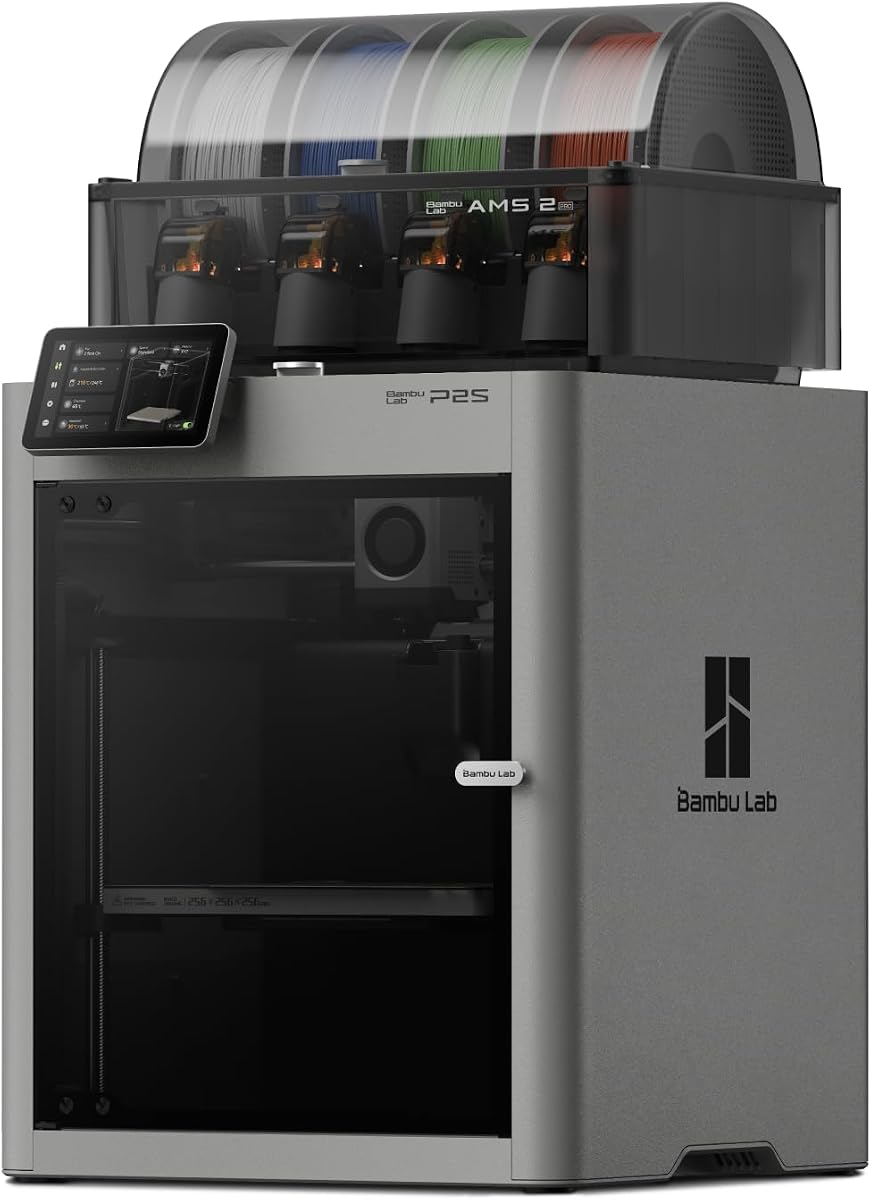
The Bambu Lab P2S Combo combines a high-speed printer with the AMS 2 Pro multi-color system. It prints at 600mm/s and uses adaptive airflow for consistent layers. The AMS includes built-in drying.
We may earn a commission when you buy through this link, at no additional cost to you.
Its smart airflow system balances cooling and heat retention for engineering materials. AI detection and auto calibration minimize failures. The carbon filter keeps air clean while printing.
This setup is an investment in speed and quality. The AMS adds complexity but enables vibrant models. It is best for makers needing advanced capabilities.
Creators focused on multi-color DnD sets will benefit. Its workflow is seamless for detailed jobs. Consider it for professional output.
AMS 2 Pro includes built-in drying to keep spools ready for flawless prints.
Smart airflow automatically balances cooling to ensure crisp overhangs on models.
We may earn a commission when you buy through this link, at no additional cost to you.
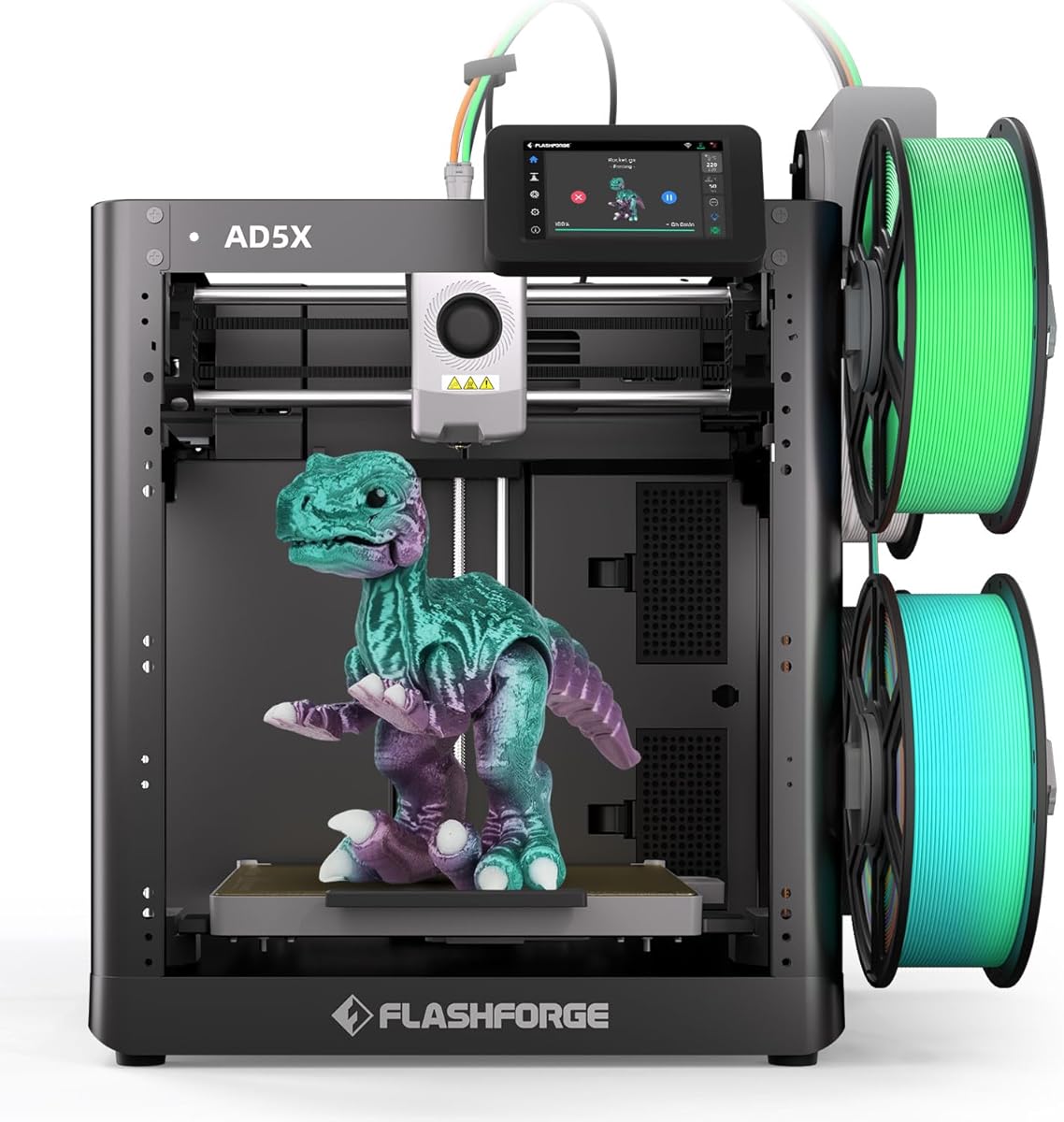
The FLASHFORGE AD5X brings four-color printing with an Intelligent Filament System. It supports speeds up to 600mm/s and a 300C nozzle for diverse materials. Its Core XY structure ensures stability.
We may earn a commission when you buy through this link, at no additional cost to you.
The IFS allows seamless filament management and refilling. It handles flexible TPU and high-temp materials. This versatility suits varied DnD projects.
Setup may require calibration for IFS. The high speed demands careful settings. However, print quality remains solid with proper use.
Designers needing multi-color and robust materials will find it suitable. It offers a strong balance of speed and capability.
IFS automatically detects and refills filament to minimize downtime during prints.
A 300C nozzle supports engineering materials for durable miniatures.
We may earn a commission when you buy through this link, at no additional cost to you.
The Bambu Lab P1S features an enclosed body for stable printing of engineering filaments. It reaches 500mm/s and offers auto bed leveling. Setup takes 15 minutes.
We may earn a commission when you buy through this link, at no additional cost to you.
Supports include PLA, TPU, and ASA. Its fully enclosed design improves performance for advanced materials. The user-friendly design ensures reliable results.
It lacks a built-in color system without AMS. However, its reliability for single-color parts is excellent. The enclosure helps with warping.
For makers needing a stable and fast FDM printer, this is ideal. It is great for functional DnD accessories.
Fully enclosed body improves print performance for advanced filaments like ABS and ASA.
Set up in 15 minutes to spend more time printing and less time assembling.
We may earn a commission when you buy through this link, at no additional cost to you.
The Adventurer 5M Pro features a 3-second quick-swap nozzle for easy maintenance. It has a dual filtration system and operates under 50dB. Its 280C extruder supports various materials.
We may earn a commission when you buy through this link, at no additional cost to you.
Auto leveling ensures perfect first layers. The smart camera allows remote monitoring. Its CoreXY structure provides vibration compensation.
Its bed size limits large prints but suits miniatures well. The filtration is great for indoor use. However, software is proprietary.
For home or office use, this is a clean and quick option. It balances ease of maintenance with solid performance.
A 3-second tool-free nozzle swap makes changing sizes fast and easy.
Integrated dual filtration and enclosed chamber ensure a clean environment while printing.
We may earn a commission when you buy through this link, at no additional cost to you.
This model focuses on multi-material printing with four-color capability. Full auto calibration ensures consistent layers. The IFS allows multiple materials like PLA and PETG.
We may earn a commission when you buy through this link, at no additional cost to you.
Vibration compensation minimizes layer shifts. The modular design saves space. It is designed to maximize productivity.
Tuning IFS requires patience. However, results are accurate. The compact design fits smaller workspaces well.
For makers needing multi-material parts, this is a strong choice. It balances capability with a small footprint.
IFS allows printing with multiple materials simultaneously for complex builds.
Modular design and side-by-side spools reduce desk space needed.
We may earn a commission when you buy through this link, at no additional cost to you.
The A1 Mini Combo is a compact version with AMS lite for multi-color printing. It features 10,000 mm/s² acceleration. Setup takes 20 minutes.
We may earn a commission when you buy through this link, at no additional cost to you.
Its quiet operation under 48dB suits shared spaces. The AMS adds color versatility. However, build volume is limited.
This unit is ideal for smaller prints or desktop use. It balances speed and noise well. The open frame limits some materials.
For beginners needing a quiet multi-color printer, this is excellent. It fits well in shared workspaces.
Lightweight modular design fits easily on a desk or small table.
AMS lite enables vibrant multi-colored prints for fun character models.
We may earn a commission when you buy through this link, at no additional cost to you.
The Kobra X features native 4-color printing with expandable options. It reaches 600mm/s and uses LeviQ 3.0 leveling. Setup takes 15 minutes.
We may earn a commission when you buy through this link, at no additional cost to you.
AI monitoring and spaghetti detection ensure success. The app allows remote control. It supports flexible materials.
Filament is not included. However, speed is high. The library offers 100,000 models.
For home users seeking native multi-color, this is a great fit. It balances features with ease of use.
Comes with 4 colors built-in and expands to 19 colors with ACE units.
Spaghetti detection and foreign object detection prevent print failures.
We may earn a commission when you buy through this link, at no additional cost to you.
Selecting the right printer depends on your desired detail level, material flexibility, and budget. This guide breaks down key factors to simplify your decision.
High resolution is essential for crisp facial features on miniatures. Resin printers offer finer XY resolution than FDM. Look for 22 micron or better for tabletop quality.
Prioritize printers with high XY resolution for detailed figures and crisp layers.
Consider how many figures you can print at once. Larger volumes reduce batch times. Ensure the build size fits your model height and layout.
Choose a volume that matches your typical campaign scale to maximize output.
Fast accelerations reduce wait times for bulk armies. High speeds like 500mm/s allow quick prototyping. Balance speed with accuracy for clean edges.
Look for high acceleration and speed ratings to minimize wait times.
Multi-color printing simplifies painting and highlights details. Systems like AMS or IFS enable vibrant figures. Ensure software supports color management.
Opt for native multi-color systems to reduce post-processing paint time.
Flexible or high-temp materials support functional parts. Ensure nozzle and bed temps support your chosen filaments. Check for TPU or engineering plastic support.
Verify filament compatibility for durable and versatile prints.
Auto calibration and leveling reduce setup frustration. Touchscreens and mobile apps simplify control. Beginners benefit from pre-assembled units.
Choose models with auto calibration for a smoother start.
Quiet printers suit home or shared workspaces. Active noise cancellation is a plus. Keep noise under 50dB for comfort.
Prioritize low-decibel ratings for peaceful printing environments.
Open-source slicers offer more customization. Check for remote monitoring features. A robust library of models can aid your campaigns.
Select printers with flexible software support for easier workflows.
Start by calibrating the build plate and checking nozzle alignment. Auto leveling helps, but manual verification ensures a perfect first layer for miniatures.
Use proper slicer settings like small layer height for detail. Support structures are vital for overhangs. Adjust print speed based on the complexity.
Clean the nozzle and check belts regularly. Store filament in dry boxes to avoid moisture issues. Follow manufacturer guidelines for long-term maintenance.
Yes, FDM printers can produce DnD miniatures with smaller nozzles and high settings. However, resin printers generally offer finer detail for intricate designs. Choose FDM for durability or resin for realism.
For tabletop scale, 22 micron XY resolution on resin printers is ideal. FDM with a 0.25mm nozzle also works. Prioritize layer height and XY precision for visible details.
Some printers require an AMS or similar module for multi-color. Others like Anycubic Kobra X offer native systems. Check model specs before buying to ensure color support.
Resin prints may take 1 to 2 hours per model depending on height. FDM prints can vary from 2 to 6 hours. Faster machines reduce these times significantly.
Resin miniatures are strong if cured properly but can be brittle. FDM figures are more flexible and robust. Consider your usage needs when choosing material.
Popular slicers include Lychee, Chitubox for resin and Bambu Studio for FDM. These support supports and model preparation. Open-source options offer advanced controls.
We reviewed ten top printers ranging from compact resin units to advanced multi-color FDM systems. Each offers distinct strengths for miniature printing quality and speed.
Prioritize resolution if you need fine details or speed if you want rapid production. Multi-color systems simplify painting workflows significantly.
Always verify current pricing and availability before purchase. A good printer should match your specific needs and space for long-term satisfaction.