
10 Pack 3 Pins AMS1117-3.3 DC 4.75V-12V to 3.3V Voltage Regulator
4.1Editor score
Supports 4.75V to 12V input
Fixed 3.3V output at 0.8A
Simple 3-pin design for easy wiring
Includes overheat and overload protection
This guide compares the top 5V to 3V voltage regulator options available today to help you find the perfect power solution for your electronic projects.
Choosing the right voltage regulator is essential for powering sensitive electronics like microcontrollers and sensors reliably. A good regulator ensures stable output despite input fluctuations, protecting your valuable components from damage during operation.
We compared ten highly rated products based on input range, output current, size, and user feedback. Our analysis focuses on both switching buck converters and linear regulators to cover diverse project requirements.
Each pick highlights key specifications and real-world performance notes to help you decide quickly. Keep in mind that prices and availability change frequently, so verify current details before ordering your supplies.
4.1Editor score

4.6Editor score

The following table provides a side-by-side overview of all ten selected regulators. It highlights key specifications like input range, output current, and physical dimensions to facilitate quick comparison.


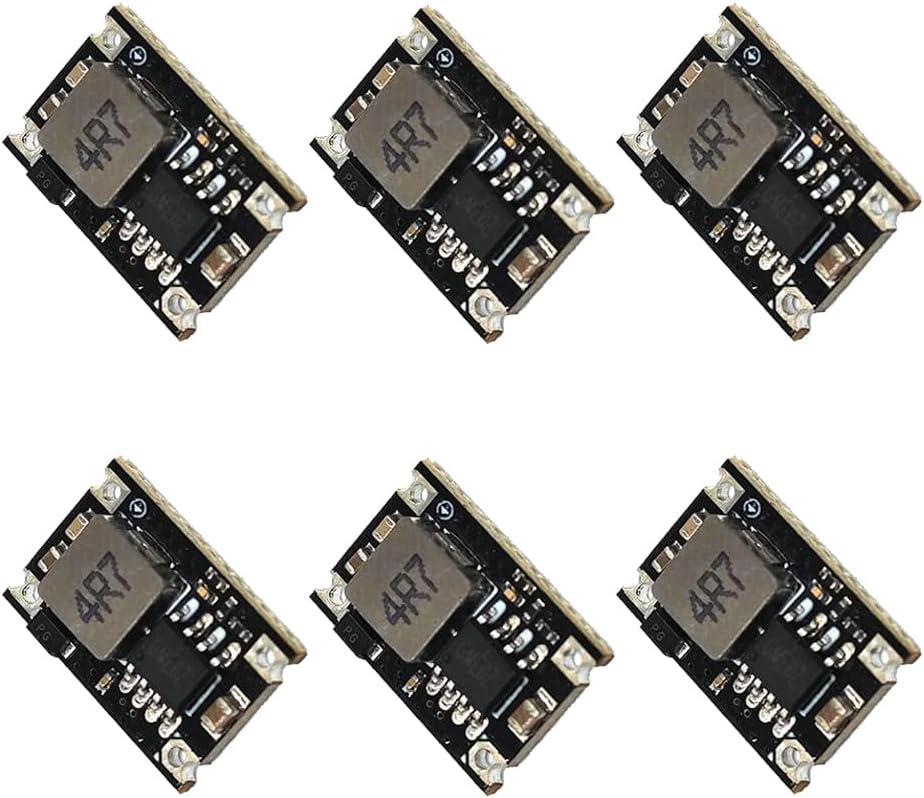
This buck converter module stands out as a top choice for general electronics projects needing reliable power. With a 4.6 rating, it offers a balance of performance and price that appeals to hobbyists.
We may earn a commission when you buy through this link, at no additional cost to you.
Its ability to accept inputs from 4.5V all the way to 24V makes it incredibly versatile for battery or mains powered systems. The low ripple ensures microcontrollers receive clean power.
While the small size is great for space constraints, it can make soldering wires a bit tricky for beginners. You might want to use header pins for easier connection.
Anyone building multiple circuits or needing a compact power solution should buy this. It provides the best all-round experience without breaking the budget.
This module works with a wide range of power sources including 5V, 9V, 12V, and 24V supplies without additional conversion.
The switching design ensures low heat generation and output ripple stays under 30mV for sensitive components.
We may earn a commission when you buy through this link, at no additional cost to you.
If you need a basic regulator on a tight budget, this AMS1117 pack is ideal. It holds a 4.1 rating and is widely used for standard stepping down needs.
We may earn a commission when you buy through this link, at no additional cost to you.
The simplicity of the design makes it perfect for beginners who want to avoid complex soldering. It integrates easily into breadboards and perfboards.
Be aware that as a linear regulator, it dissipates heat when the voltage difference is high. It is best used when input voltage is close to output voltage.
Choose this if you value simplicity and low cost over efficiency. It is perfect for low current logic level conversion.
The dual panel design with 2 pin single row pins simplifies connecting to MCU development boards quickly.
Overheat shutdown circuits protect the chip from damage during overload or high temperature conditions.
We may earn a commission when you buy through this link, at no additional cost to you.
This premium regulator offers high performance with a wide input range that goes up to 30V. It is a strong candidate for robust and demanding projects.
We may earn a commission when you buy through this link, at no additional cost to you.
The ability to supply up to 1.8A peak current makes it suitable for powering larger sensors or motors alongside logic. Clean power ensures reliability.
Its small size is perfect for wearables and IoT devices where space is at a premium. You get five units for prototyping different setups.
Buy this if you need a reliable and flexible power source. It delivers high quality for a fair price.
Works with 12V/24V batteries solar panels and vehicle power effectively without extra components.
Fits wearables drones and tight PCB layouts easily due to its miniature dimensions.
We may earn a commission when you buy through this link, at no additional cost to you.
With a perfect 5.0 rating, this module is a highly trusted option for stepping down voltage efficiently. It combines a tiny form factor with decent current capability.
We may earn a commission when you buy through this link, at no additional cost to you.
The Mini360 design is known for being incredibly compact. It fits into spaces where other regulators simply cannot go. The low ripple ensures sensitive chips remain stable.
Note that using motors or servos may require adding Zener diodes to prevent back EMF damage. This is a standard precaution for many buck converters.
This is an excellent choice for portable projects needing clean power. It delivers reliability in a miniature package.
Dimensions of 17.5×12.3×4.3mm allow it to fit into very narrow project enclosures.
Output ripple stays less than 30mV and switching frequency is typically 1MHz.
We may earn a commission when you buy through this link, at no additional cost to you.
This pack offers seven linear regulators ideal for small scale logic conversion. It rates 4.2 and provides a straightforward solution for 5V to 3.3V needs.
We may earn a commission when you buy through this link, at no additional cost to you.
The 3 pin design makes it simple to integrate into SCM project designs. It ensures constant power supply for your development boards.
Be mindful not to exceed 800mA load current or the unit may be damaged. It is best suited for sensors and logic only.
Choose this for low current applications where cost is key. It is a solid option for entry level electronics.
Delivers a fixed 3.3V output which simplifies circuit design for 3.3V devices.
Overheat protection circuits help prevent damage during abnormal operating conditions.
We may earn a commission when you buy through this link, at no additional cost to you.
This high volume pack offers excellent value with fifteen units included. It holds a perfect 5.0 rating for consistent quality and reliability in basic circuits.
We may earn a commission when you buy through this link, at no additional cost to you.
The dynamic voltage difference control helps reduce power consumption in battery scenarios. It adjusts impedance to maintain stability efficiently.
While it supports 12V input, the heat generated might be significant if current draw is high. Consider a heatsink for sustained loads.
Buy this if you need many regulators for mass production or testing. It is reliable and easy to use.
Ensures minimal voltage fluctuation when the load changes with accuracy within 2 percent.
Dynamic control of voltage difference significantly reduces power consumption for portable scenarios.
We may earn a commission when you buy through this link, at no additional cost to you.
This black PCB board offers a small footprint and high current capability. It rates 3.4 but provides features that appeal to compact project builders.
We may earn a commission when you buy through this link, at no additional cost to you.
It supports inputs up to 30V which is useful for industrial or automotive use. The output can reach 1.8A peak current for demanding tasks.
Some users report voltage drops under full load which should be expected. It is a good option if space is the primary constraint.
Use this for applications where size matters most. It provides solid performance for its compact build.
The PCB board has a reverse polarity mark which can suppress ripple and protect the circuit.
Output ripple is less than 30mV typically and frequency is up to 1.5MHz.
We may earn a commission when you buy through this link, at no additional cost to you.
These units come pre tested before shipping which reduces the risk of defects. They handle wide inputs and deliver up to 1.8A peak current reliably.
We may earn a commission when you buy through this link, at no additional cost to you.
The wide input range makes it suitable for solar panels or 24V batteries. It integrates easily with most standard development boards.
Soldering wires is required for connection which might be a small hurdle for some. However this ensures a solid fit.
Buy this if you need verified working regulators quickly. It is great for prototyping and builds.
Each unit is tested before shipping to ensure consistent performance upon delivery.
Works with 12V and 24V batteries solar panels and vehicle power systems effectively.
We may earn a commission when you buy through this link, at no additional cost to you.
This pack holds a perfect 5.0 rating and includes ten units for varied projects. It features a start limit voltage that helps manage power efficiently.
We may earn a commission when you buy through this link, at no additional cost to you.
The automatic adjustable boost board allows for flexible use across different voltage inputs. It is ideal for battery projects up to 7V.
Do not exceed operating voltages as damage may occur easily. Keep load current under 800mA to ensure longevity.
Buy this for battery operated devices needing reliable power. It is a high value option for small scale builds.
The module indicates the operating voltage automatically to prevent exceeding safe limits.
Ten pieces in one pack offer excellent quantity for multiple project prototypes.
We may earn a commission when you buy through this link, at no additional cost to you.
With a near perfect 4.9 rating, this module uses the robust MP1584EN chip. It is excellent for high current and compact applications.
We may earn a commission when you buy through this link, at no additional cost to you.
The output current reaches 1.8A which supports more demanding electronics. It keeps ripple low to ensure signal integrity for sensitive parts.
You might add capacitors for protection when using with motors. This ensures the rear stage chips are safe from back EMF.
Select this for aircraft models or portable high power devices. It is a top rated solution for reliable power.
Features the MP1584EN power module for robust and reliable voltage conversion performance.
Dimensions of 17x11x3.6mm allow it to fit in aircraft models and tight spaces.
We may earn a commission when you buy through this link, at no additional cost to you.
Selecting the right regulator depends on several factors like input voltage output current and physical size. Understanding these helps you avoid damage and inefficiency.
Ensure the regulator accepts your power source voltage. Some accept up to 30V while others only go to 12V. Choosing the wrong range can destroy the unit.
Check the datasheet for minimum and maximum input limits before buying.
Calculate the total current draw of your load. If your project needs 1A ensure the regulator supports at least that. Exceeding limits causes overheating and failure.
Select a regulator with a current rating higher than your max load.
Switching buck converters are more efficient and produce less heat than linear regulators. Linear ones waste voltage as heat which may require heatsinks in high drops.
Choose switching for battery power or linear for low noise low heat.
Small projects require tiny modules. Many options are under 20mm long but check pin spacing for fit. Space constraints may dictate which package type you select.
Verify the size matches your PCB or enclosure layout.
Clean power is vital for sensitive sensors and logic. Low ripple under 30mV ensures stability. High ripple can introduce noise into your circuit.
Look for specs mentioning ripple to maintain signal integrity.
Solder pads or pin headers vary by model. Some require soldering while others are plug and play. Pick a type that matches your skill level.
Prefer modules with clear pin labels for easy connection.
Built-in overload or overheat protection saves your device. Many regulators shut down under stress to prevent burnout. This adds safety for long term use.
Prioritize units with overheat or overcurrent protection circuits.
Buying packs of five or more reduces cost per unit. Ensure the price per module is reasonable. Bulk buys are ideal for batch projects.
Compare price per unit to get the best value for your needs.
Connect the input pins to your power source ensuring polarity matches. Double check your work to avoid shorting the supply.
Attach your load to the output pins and ensure all grounds are common. Use wires with proper gauge to avoid voltage drop.
Monitor heat during initial use and allow ventilation. If using with motors add external capacitors or diodes for protection.
Yes some buck converters accept inputs up to 24V or more. Check the input range on the product page. Linear regulators may overheat if the drop is too high.
Buck converters switch to step down voltage efficiently with less heat. Linear regulators drop voltage by burning excess as heat. Buck is better for efficiency.
Switching modules often do not need heatsinks. Linear ones may if the current is high. Check the specs and temperature rise before adding.
Yes they are compatible with 5V Arduino logic levels. Just wire the 3.3V output to the logic pins. Ensure ground connections are shared.
Most supply up to 1.8A or 0.8A depending on the model. Check the rating before powering heavy loads. Exceeding limits can damage the board.
Connect the input to your power source and output to your device. Use the VCC and GND pins clearly marked on the board. Ensure polarity is correct.
Our top picks include the versatile buck converters for broad input and the simple linear modules for ease of use. Each option balances size and performance well.
Prioritize input range and current capacity when selecting a regulator. These factors determine if the unit will survive your power conditions.
Remember to check current prices and reviews before purchasing. Supplies change often so verify availability for your order.