
Nano V3.0
4.6Editor score
ATmega328P Microcontroller
CH340G USB Driver
Breadboard Friendly Design
This guide compares the top Arduino Nano Board options available in 2026 to help you choose the right microcontroller for your embedded projects and prototyping
The Arduino Nano Board remains a cornerstone of modern electronics prototyping due to its compact size and powerful capabilities. Whether you are building a simple sensor node or a complex robotic arm, finding the right version of this microcontroller is essential for project success.
We have evaluated ten distinct models ranging from classic clones to the latest official releases. Our comparison focuses on compatibility, performance, connectivity options, and overall value to ensure you find a board that fits your specific technical requirements.
Each pick below highlights unique strengths such as USB-C support, enhanced memory, or wireless capabilities. Please note that prices and availability fluctuate frequently so verify current details before making your final purchase decision.
4.6Editor score

4.6Editor score

4.6Editor score
The following table provides a side-by-side view of the key specifications for each model to help you quickly identify the best fit for your specific hardware and software requirements.


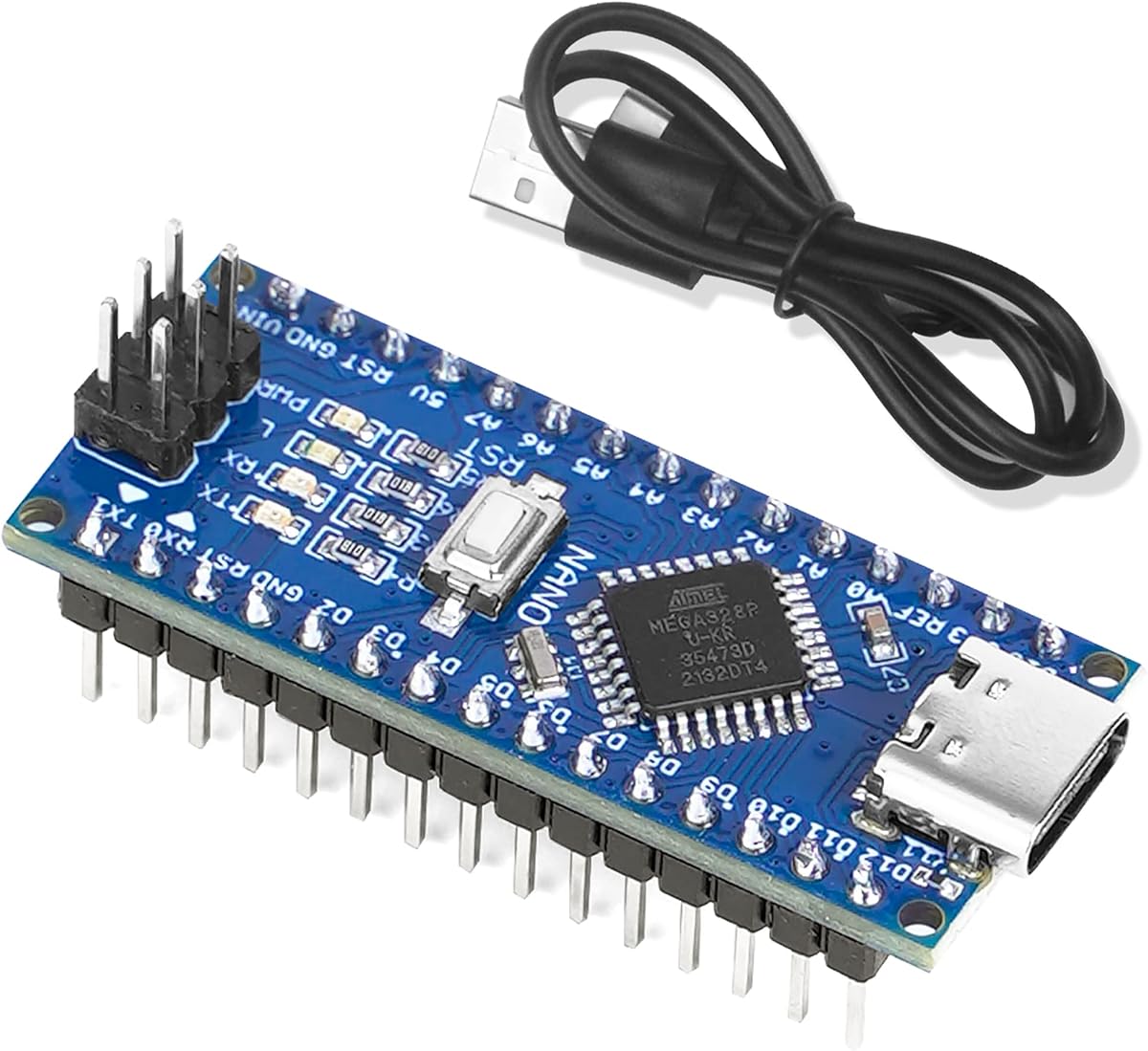
This three pack offers an excellent entry point for anyone needing multiple units for distributed projects. The boards use the reliable ATmega328P chip which ensures compatibility with the vast majority of existing Arduino libraries and sketches.
We may earn a commission when you buy through this link, at no additional cost to you.
The CH340G driver is widely supported across operating systems making installation straightforward for most users. The physical dimensions match the original Nano specification allowing it to fit into standard shields and breadboards without modification.
While the build quality is not as rigorous as official boards they function reliably for hobbyist applications. The included USB cables are basic but sufficient for data transfer and power delivery during development sessions.
This option is ideal for educators or makers who need to outfit multiple workstations without breaking the bank. It provides the core functionality of the Nano platform at a fraction of the cost of branded alternatives.
Buying in a three pack reduces the cost per unit significantly which is perfect for classroom setups or bulk project needs.
The CH340G chip requires a driver install on some systems but this is a one-time setup that works seamlessly thereafter.
We may earn a commission when you buy through this link, at no additional cost to you.
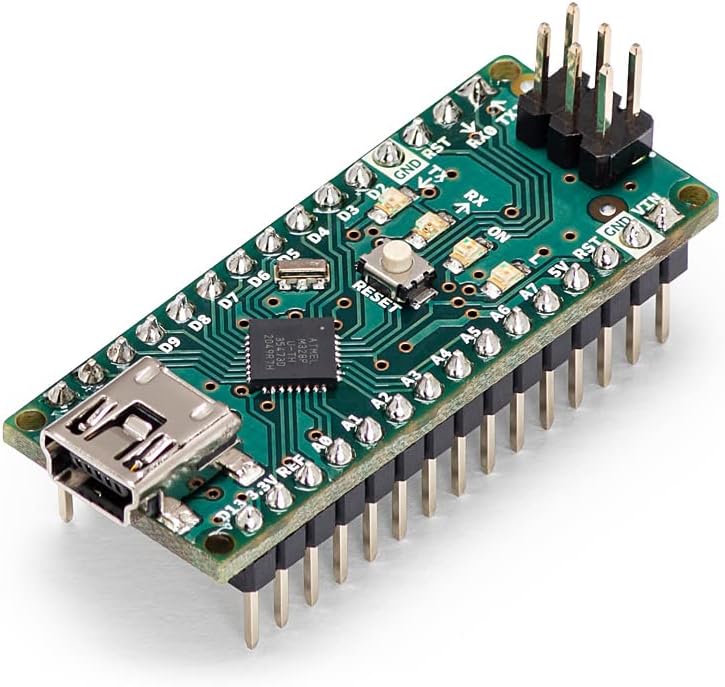
The official Arduino Nano sets the standard for reliability and build quality in the compact microcontroller space. Its design has been refined over years of field use ensuring it withstands the rigors of prototyping and deployment.
We may earn a commission when you buy through this link, at no additional cost to you.
Users benefit from full compatibility with the Arduino ecosystem including shields and documentation. The 14 digital I/O pins and 8 analog inputs provide ample connectivity for most standard sensor and actuator applications.
The mini USB port is less modern than USB-C but remains functional and widely available. The higher cost reflects the investment in quality control and support that official hardware provides over clones.
Choose this board when project stability and long term reliability are paramount. It is a safe bet for professional prototypes or projects where failure is not an option.
Official boards guarantee compatibility with all certified shields and extensions simplifying the expansion of your hardware design.
The PCB and components are selected for higher endurance reducing the risk of failure during extended testing cycles.
We may earn a commission when you buy through this link, at no additional cost to you.
This kit updates the classic Nano experience with a USB-C port which is becoming the standard for modern computing devices. The inclusion of pre-soldered headers saves time for users who want to plug directly into breadboards.
We may earn a commission when you buy through this link, at no additional cost to you.
The CH340 driver provides a stable connection for uploading code across Windows Mac and Linux systems. The three board bundle ensures you have spares for testing or multiple nodes in a sensor network.
While the underlying microcontroller is the same ATmega328P the physical improvements make it more pleasant to use daily. The USB-C cable supports data transfer power delivery and is reversible for convenience.
This is an excellent choice for students or makers who want modern connectors without the complexity of soldering headers themselves. It bridges the gap between legacy standards and current hardware trends effectively.
The USB-C port aligns with modern cables reducing the need for adapters and improving connection durability.
Pre-soldered headers allow immediate integration into projects without additional assembly tools or time.
We may earn a commission when you buy through this link, at no additional cost to you.
The Nano Every represents a significant step forward in performance while maintaining the familiar form factor. It utilizes the ATmega4809 chip which offers faster clock speeds and more memory than the classic version.
We may earn a commission when you buy through this link, at no additional cost to you.
This extra memory allows for more complex code and larger libraries without running into storage limitations. The USB-C port ensures compatibility with modern cables and provides more robust power delivery options.
It remains fully compatible with the Arduino IDE and most existing shields making it an easy upgrade path. The increased number of digital I/O pins provides more flexibility for complex circuit designs.
We recommend this board for projects that require more computational power or memory. It is the best balance of modern features and traditional compatibility for serious embedded development.
With 48KB of flash you can store more complex algorithms and data sets on the board itself.
Having 20 digital pins allows for more sensors and outputs without needing external multiplexers.
We may earn a commission when you buy through this link, at no additional cost to you.
This board bridges the gap between classic Arduino form factors and modern IoT capabilities. The ESP32-S3 chip provides powerful wireless connectivity without requiring external modules which simplifies circuit design significantly.
We may earn a commission when you buy through this link, at no additional cost to you.
It supports both C++ and MicroPython making it accessible for developers with different skill sets. The dual core architecture handles complex tasks more efficiently than single core competitors in the same size.
USB-C ensures fast programming and reliable power delivery for high power wireless transmissions. The board supports HID profiles allowing it to function as keyboards or mice for unique project applications.
Choose this for any project requiring network connectivity or advanced processing within a compact footprint. It is the future of the Nano platform combining small size with smart features.
Native Wi-Fi and Bluetooth support removes the need for separate communication modules saving space and cost.
MicroPython support allows faster prototyping and easier coding for users familiar with Python syntax.
We may earn a commission when you buy through this link, at no additional cost to you.
This two pack offers a balanced option for those who need a spare board alongside their main unit. The USB-C port adds a layer of modern convenience that is often missing in older clone models.
We may earn a commission when you buy through this link, at no additional cost to you.
The boards are compatible with standard Arduino libraries and tools making them a drop-in replacement for many projects. They run at 16MHz which is the standard speed for most timing sensitive applications.
Cables are included in the package which adds to the overall value proposition. The CH340G chip ensures broad operating system compatibility once the drivers are installed.
Ideal for small projects or as a backup for your primary board. The price point is low enough to buy without worrying about damaging a board during initial tests.
Including two boards and cables in one package makes this a complete solution for basic prototyping needs.
The shift to USB-C improves durability and aligns with modern computer port standards.
We may earn a commission when you buy through this link, at no additional cost to you.
For those needing multiple nodes for a sensor network this three pack is a strong candidate. Each board comes with the necessary cable and features the updated USB-C connector for better connectivity.
We may earn a commission when you buy through this link, at no additional cost to you.
The ATmega328P core ensures that code written for other standard Nanos will run without modification. The 16MHz clock speed provides reliable timing for most standard Arduino sketches.
The CH340G driver allows communication across major operating systems. This makes it easy to deploy across different workstations in a team environment.
Use these for distributed systems or testing environments where individual board cost matters. The bulk pricing makes it feasible to replace boards easily if any fail during stress testing.
Multiple units allow you to build mesh networks or distributed sensor arrays easily.
Buying three at once reduces the per unit cost significantly compared to single board purchases.
We may earn a commission when you buy through this link, at no additional cost to you.
The Nano R4 introduces a completely new architecture based on Renesas technology with substantial performance gains. It includes a built-in Qwiic connector which simplifies wiring for many digital sensors.
We may earn a commission when you buy through this link, at no additional cost to you.
The programmable RGB LED provides immediate visual feedback for debugging without needing external components. The pre-soldered headers make it ready to plug into breadboards right out of the box.
It runs at a high clock speed allowing for faster processing of data and signals. The official support ensures long term software updates and documentation availability.
This is the future of the Nano line offering modern features while keeping the familiar size. It is perfect for projects that benefit from easy sensor integration and visual indicators.
The Qwiic connector allows you to add sensors without soldering or complex wiring harnesses.
The programmable LED helps visualize states and errors directly on the board without extra hardware.
We may earn a commission when you buy through this link, at no additional cost to you.
This version of the R4 allows you to solder the headers yourself giving you more control over the final form factor. It includes castellated edges which are useful for direct mounting on custom PCBs.
We may earn a commission when you buy through this link, at no additional cost to you.
It shares the same powerful Renesas processor and Qwiic capabilities as the soldered version. This makes it a versatile choice for users who want to build custom carrier boards.
The loose headers give you flexibility to orient them differently if needed for your specific assembly. The RGB LED and IDE compatibility remain consistent across all R4 models.
Select this if you are planning to integrate the board into a larger custom product. The castingated edges facilitate professional integration into permanent assemblies.
Castellated edges allow the board to be surface mounted directly onto your custom designed PCB.
You can solder the pins to suit your specific layout requirements for tight spaces.
We may earn a commission when you buy through this link, at no additional cost to you.
This module strips away excess plastic to offer a bare board form factor ideal for tight spaces. It retains the full functionality of the standard Nano including the ATmega328P and USB-C interface.
We may earn a commission when you buy through this link, at no additional cost to you.
The small footprint makes it easy to fit into portable or wearable projects where space is critical. It maintains compatibility with standard Arduino IDE tools for ease of programming.
The CH340 chip ensures broad driver support across operating systems. It is a cost-effective way to get a reliable microcontroller in the smallest possible package.
Use this for wearable technology or portable devices where every millimeter counts. The compact design helps reduce the overall size of your final assembly significantly.
The small form factor is perfect for wearable electronics or portable devices.
Removing the plastic housing reduces weight and size without sacrificing core functionality.
We may earn a commission when you buy through this link, at no additional cost to you.
Selecting the right Nano board involves balancing performance features and budget requirements.
Most classic boards use the ATmega328P which is reliable but older. Newer options like the Nano Every use the ATmega4809 for better performance while the Nano R4 uses Renesas chips for advanced capabilities.
Consider whether your project needs more memory or speed to justify moving away from the classic architecture.
Modern USB-C ports are becoming standard and offer better durability and power delivery. Older models use Micro USB or Mini USB which may require specific cables.
Prioritize USB-C to ensure your board works with current computers without adapters.
The Nano ESP32 integrates Wi-Fi and Bluetooth directly into the board. This eliminates the need for external shields for IoT projects.
If connectivity is essential choose a board with built-in radio to save space and complexity.
Official boards provide guaranteed quality and support but cost more. Clones are cheaper but vary in build quality and chip consistency.
Use official boards for critical projects and clones for testing or bulk needs.
Some boards come with pre-soldered headers for plug and play use while others ship loose for custom mounting.
Choose pre-soldered for breadboarding and loose headers for custom PCB designs.
Flash and SRAM sizes vary across models affecting how much code you can store.
Opt for boards with larger memory if you plan to use complex libraries or data logging.
The number of digital and analog pins determines how many sensors you can connect.
Check the pinout before buying to ensure it matches your circuit requirements.
Ensure the board is compatible with the Arduino IDE or other tools you prefer.
Most boards support standard IDE tools but some newer ones may require specific updates.
Connect your board to a computer using a compatible USB cable to install drivers if necessary. Open the Arduino IDE and select the correct board type from the Tools menu to begin programming.
Upload sketches by clicking the upload button and wait for the confirmation message. Ensure your power supply is stable to avoid damage during operation.
Store boards in a dry place and avoid bending pins during insertion into breadboards to maintain connection integrity.
The classic Nano V3.0 clones are excellent for beginners due to low cost and simplicity. They allow you to learn the basics without investing too much money in hardware.
Not all models require soldering. Look for pre-soldered options if you want plug and play convenience. Loose headers are only necessary for custom PCB mounting.
The ATmega4809 offers more memory and faster clock speeds. It is a better choice for complex projects while the ATmega328P is sufficient for standard tasks.
Most standard shields work with all boards due to compatible pin layouts. Newer boards like the R4 may have slight physical differences to check compatibility first.
Yes USB-C offers reversible connectivity and better durability. It is the modern standard for data and power transfer for development boards.
Most modern computers have built-in drivers for common chips like CH340. If not you may need to download a small driver from the chip manufacturer.
It is designed for projects that require internet connectivity. It combines the Nano form factor with built-in Wi-Fi and Bluetooth for IoT applications.
You can use the VIN pin with a regulated power supply between 5V and 12V. The onboard regulator converts this to the required 5V logic level.
Our top picks cover a wide range of needs from budget-friendly bundles to powerful wireless models. The Nano V3.0 offers great value while the Nano Every provides a significant performance upgrade.
For professional projects consider the official boards to ensure long-term reliability. If connectivity is your priority the Nano ESP32 is the most capable option in this lineup.
Prices for these microcontrollers fluctuate so check current deals before finalizing your purchase. Selecting the right board ensures your projects run smoothly from prototype to deployment.