10 Best Bed Alarm for Elderly and Dementia Patients (November 2026) Expert Guide
Written by Jamie · Updated November 2026
Keeping loved ones safe during sleep is a top priority for caregivers. A reliable bed alarm for elderly and dementia patients provides peace of mind by alerting you when movement is detected. These devices help prevent falls and wandering without restricting independence.
We evaluated ten leading models based on sensor accuracy, range, and ease of use. Our analysis focuses on systems that offer quick response times and durable construction. Each product was selected for its ability to fit seamlessly into daily caregiving routines.
Every pick includes detailed specs and real-world performance insights. Note that availability and pricing may change over time. We encourage you to verify current details before purchasing to ensure the best fit for your specific care situation.
Top 3 Picks for Best Bed Alarm for Elderly and Dementia Patients
Best Budget
Upgraded Version Bed Sensor Alarm and Fall Prevention for Elderly/Dementia and More,Caregiver Pager Motion Sensor Alert with 5 Volume Level,Bed Alarm for Elderly Adults Wireless
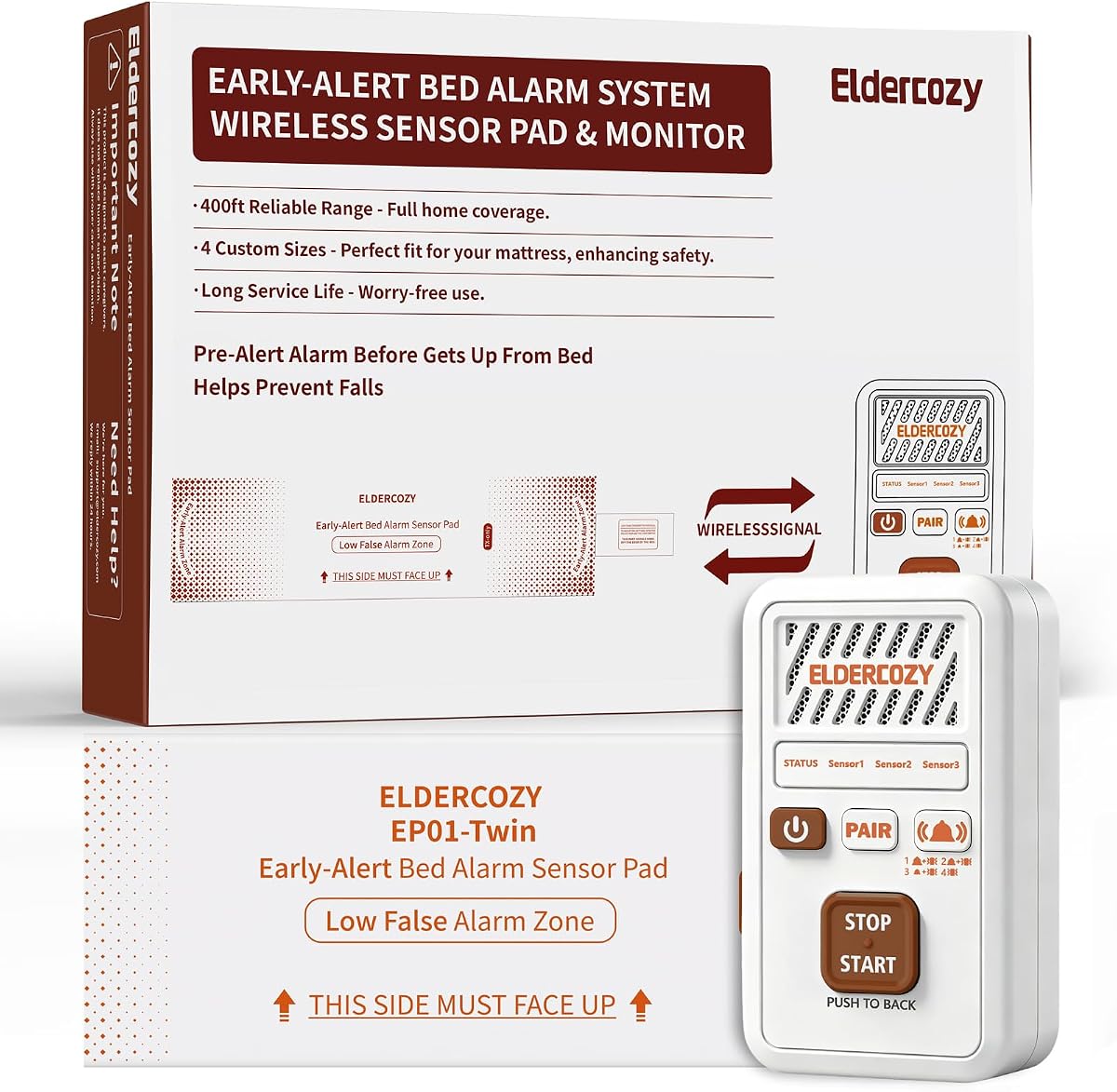
Twin Size Wireless Bed Alarms for Elderly Dementia Patients,Early Alert
Hip level alert trigger
TPU material comfort
Replaceable battery power
400 ft wireless range
This early alert system stands out for its ability to detect movement at the hip level before a patient stands up. With a rating of 4.8, it is a top choice for caregivers seeking reliable protection. The design prioritizes comfort and silent operation.
Pros
Silent operation for sleep
Highly sensitive sensor pad
Long battery life
Waterproof and easy clean
Caregiver mode feature
Cons
Slightly higher price point
Requires specific mattress sizing
We may earn a commission when you buy through this link, at no additional cost to you.
The sensor pad uses soft TPU material instead of noisy PVC, ensuring it does not crinkle when the patient moves. It triggers when the user sits on the edge of the bed, providing a critical window of time to respond. The wireless pager reaches up to 400 feet, allowing you to monitor from other rooms.
While the system is highly effective, it does require careful placement to ensure the hip level detection works correctly. The batteries are replaceable, which adds to the long term value despite the initial cost. The Caregiver Mode allows you to pause alarms for short periods during assistance.
Ideal for dementia patients who may wander or have restless sleep, this model offers dignity and safety. The waterproof design makes it practical for long term use in any home care setting. We recommend it for those who need early intervention capabilities.
Early Warning Technology
The hip level sensor detects weight shift before the feet touch the floor, giving caregivers vital seconds to prevent falls.
Comfort First Design
Soft TPU material ensures the patient is not disturbed by noise or texture under the fitted sheet.
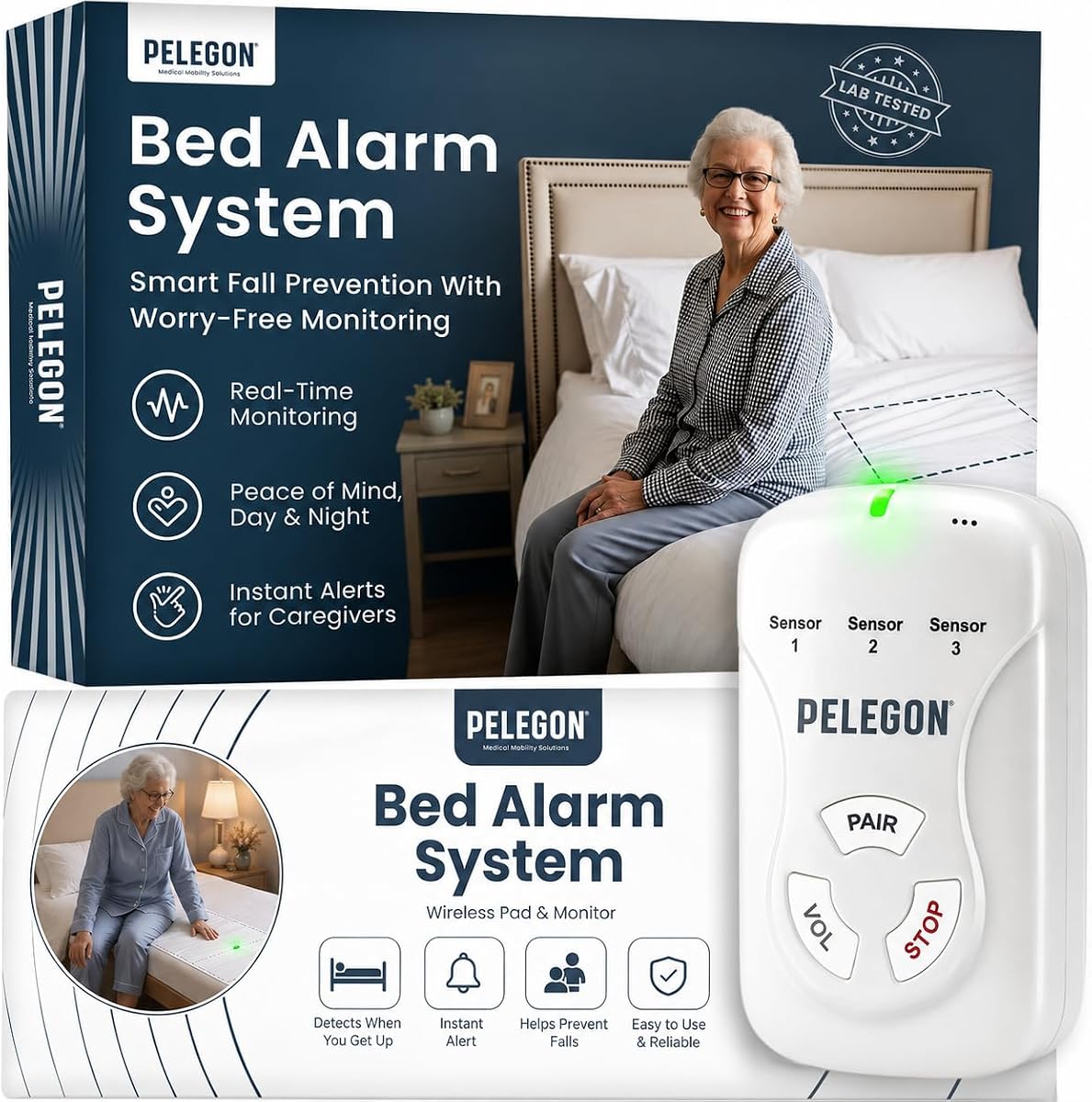
PELEGON offers a straightforward solution for fall prevention with a focus on quick deployment. The tool-free setup means you can start monitoring within seconds of opening the box. It is designed specifically to address the needs of dementia care and wandering risks.
Pros
Fast response time
Vibration only mode
Long wireless range
Easy for non technical users
Dedicated dementia support
Cons
Pager is lightweight plastic
No bed charging option
We may earn a commission when you buy through this link, at no additional cost to you.
The system includes a wireless pager that clips to a belt or fits in a pocket, extending your range to 328 feet. You can customize alerts to use sound or vibration, which helps in shared rooms where noise might disturb others. The sensor pad detects movement as a loved one begins to rise.
One trade-off is that the pager relies on batteries without a charging port, so you must keep spares handy. However, the simplicity of the system makes it a favorite for those who want minimal technical hassle. The volume adjustment allows for precise control.
This is a solid choice for anyone needing a reliable alarm that does not require complex installation. The focus on dementia care ensures that the alert is intuitive and quick to respond. We suggest it for caregivers who value speed and ease of use.
Dementia Specific Features
The alert system helps caregivers respond sooner to reduce unsafe wandering and nighttime accidents for patients with cognitive decline.
Flexible Monitoring
Customizable alert modes allow you to choose sound or vibration to suit the environment and time of day.
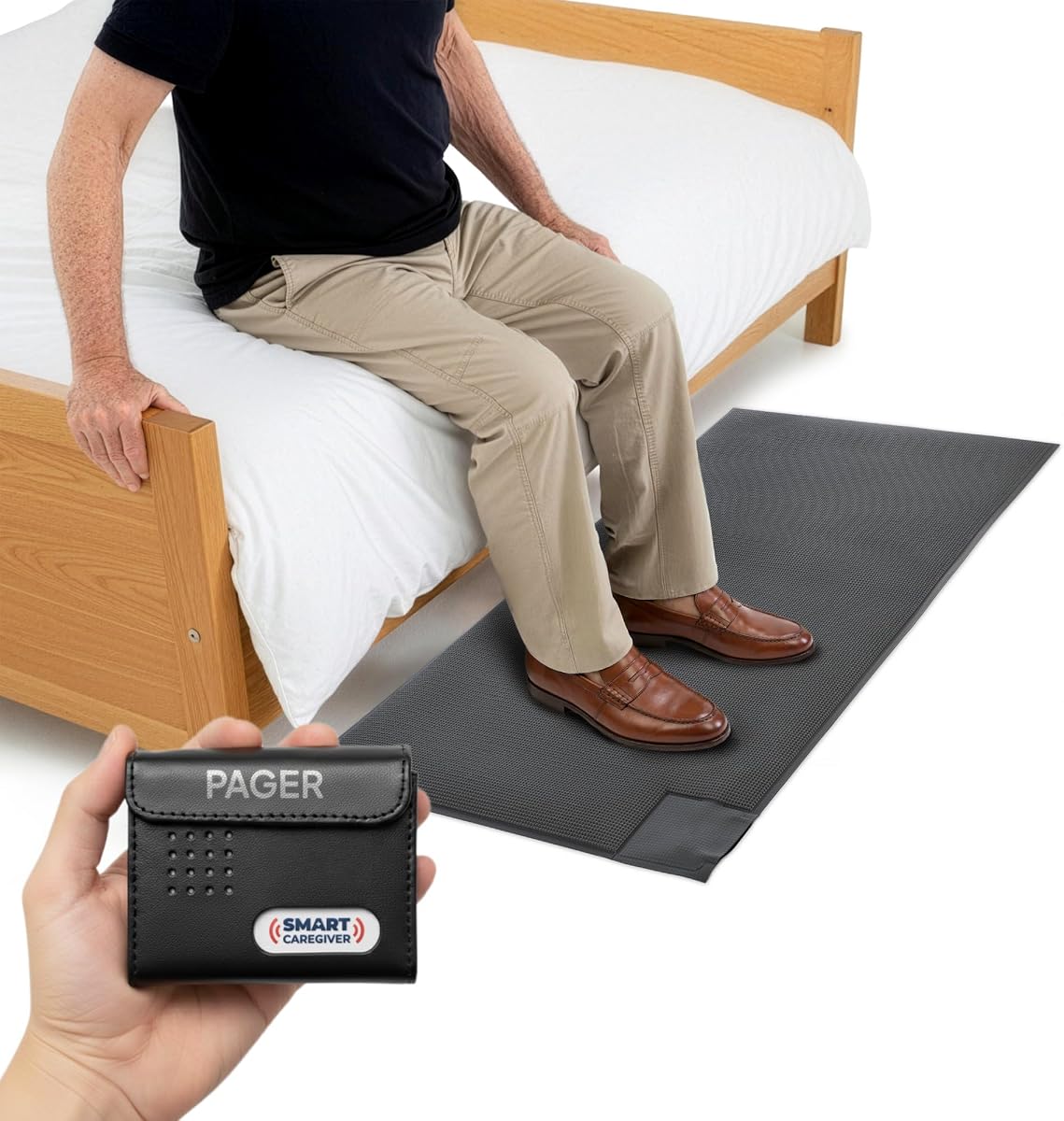
This floor mat system offers expansive coverage to monitor movement effectively. The large 24 by 48 inch mat is durable enough for daily use in various care environments. It is perfect for placing beside the bed or near an exit door to detect wandering.
Pros
Large mat area
Silent pager alerts
Durable construction
Pairs with other sensors
Professional grade quality
Cons
Requires floor space
Higher initial investment
We may earn a commission when you buy through this link, at no additional cost to you.
The included pager connects to the mat and provides both sound and vibration alerts. Because it uses a wireless signal, you can carry the pager up to 300 feet away from the patient without losing connection. This freedom allows caregivers to manage other tasks safely.
A minor limitation is that the mat requires clear floor space, which may not fit smaller rooms easily. However, its robust build ensures it withstands heavy use over time. The system can also pair with other sensors for a full home network.
Ideal for facilities or larger homes, this model provides high reliability. The Smart Caregiver brand supports it with strong customer service. We recommend this for users needing comprehensive coverage and professional grade components.
Wide Area Detection
The large mat captures steps reliably without false triggers from small movements or incontinence issues.
Expandable Safety
Pair this mat with door or bed sensors to create a complete protection network for your care facility.
Upgraded Version Bed Sensor Alarm and Fall Prevention
Motion floor sensor
918 ft range
Micro USB power
5 volume levels
This budget friendly option provides effective fall prevention without a high cost. The motion sensor can be placed under the bed to detect when a foot touches the floor. It offers a remarkable range of 918 feet in open areas.
Pros
Affordable pricing
Dual power options
Long open area range
Adjustable volume
Simple operation
Cons
Placement requires testing
Basic plastic housing
We may earn a commission when you buy through this link, at no additional cost to you.
The system supports dual power sources so you can use batteries or a Micro USB cable for continuous operation. Five volume levels let you adjust the alert tone to fit your hearing preferences. The setup process involves testing the range before fixing the sensor in place.
While the plastic housing feels basic, it is durable enough for home use. The main trade-off is that the sensor direction needs to be precise to avoid false alarms. Once set correctly, it performs well for its price point.
This is a great pick for caregivers on a tight budget who still need reliable alerts. The long range ensures you are notified even if you are far from the bedroom. We suggest this for short term or secondary monitoring needs.
Flexible Power Options
Choose between battery power for portability or Micro USB for uninterrupted continuous use without changing cells.
Wide Reach
With nearly 1000 feet of range, you can stay in a distant room while maintaining immediate awareness.
Smart Caregiver Bed Exit Alarm with Wireless Pager
Full coverage sensor
Supports six sensors
10×30 inch pad
Wireless monitoring
This bed exit alarm focuses on early detection with a full coverage weight sensor pad. The 10 by 30 inch pad is designed to reduce false alarms by using an extra large contact area. It alerts when pressure is removed as the patient begins to stand.
Pros
US based company
Expandable network
Quiet operation
Large contact sensor
Reliable alerts
Cons
Standard cord length
Pad needs flat surface
We may earn a commission when you buy through this link, at no additional cost to you.
A key advantage is the expandable network allowing the pager to support up to six different sensors. You can monitor beds, chairs, and doorways with a single device. The customer support is provided by a US based company with decades of experience.
The system works well but requires a relatively flat mattress surface for optimal sensitivity. The wireless feature ensures you are not tethered to the bed but still get instant notifications. It balances cost and features effectively for daily use.
We recommend this model for those who value local support and reliability. The ability to add sensors makes it flexible for changing care needs. It is a strong choice for home environments needing consistent monitoring.
Multi Point Monitoring
Pair multiple sensors to track activity in different rooms using one centralized pager for total peace of mind.
Accurate Detection
The extra large contact sensor minimizes false triggers from tossing and turning while sleeping.
This system is unique because it includes both a bed pad and a chair pad for versatile monitoring. You can use one monitor to switch between the two pads using a phone style clip. The alarm triggers when pressure is removed from either the bed or the chair.
Pros
Two pads included
Adjustable volume
Easy clip mount
Durable vinyl material
Simple setup
Cons
Cord length limitations
Volume hidden inside
We may earn a commission when you buy through this link, at no additional cost to you.
The monitor features adjustable volume levels located inside the battery compartment which keeps the exterior clean. The pads are sealed for incontinence protection and easy to wipe down with a wet cloth. Setup involves placing the pad under the fitted sheet or on the chair seat.
A limitation is that the volume control is hidden, requiring you to open the battery cover to change levels. However, the inclusion of two pads makes it a great value for caregivers who need to monitor sitting and lying positions equally.
We suggest this for users needing flexibility in where they track movement. It is ideal for those who want to prevent falls from a chair as well as a bed. The durable construction ensures it withstands daily cleaning routines.
Complete Seat Coverage
Monitor patients who sit for long periods by adding the chair pad to detect when they stand without assistance.
Convenient Mounting
The clip on monitor can be attached to a bed headboard or chair back for easy visibility.
This model offers a straightforward approach to bed exit monitoring with an in room alarm. The sensor pad is made of soft vinyl which is sealed for protection against incontinence. It alerts immediately when pressure is removed from the pad.
Pros
Simple design
In room alert tone
Incontinence protected pad
Flexible placement
Silence reset button
Cons
No remote pager included
Standard cord length
We may earn a commission when you buy through this link, at no additional cost to you.
The monitor can be mounted on a bed or wall for accessibility. A reset button on the front allows you to silence the alarm quickly once you arrive. The setup requires placing the pad under the fitted sheet and linking it to the monitor.
One difference is that it does not include a remote pager so the alert stays in the room. This might not suit those who need to be notified from another floor. However, the pad itself is durable and easy to clean for hygiene.
This system is best for single room setups where caregivers stay nearby. The in room tone ensures anyone present is aware of movement immediately. We recommend it for close quarter monitoring.
Immediate Notification
The alarm sounds directly in the room so caregivers who are nearby can assist instantly.
Easy Maintenance
The sealed vinyl pad can be wiped clean with a wet cloth to maintain hygiene standards.
This alarm system uses an infrared sensor placed on the floor beside the bed. The sensor rotates 360 degrees to detect movement from any direction and reduce false alarms. The receiver includes a silent vibration mode for discreet alerts at night.
Pros
360 degree sensor
Silent alert option
Multiple ringtones
Portable receiver
Type-C charging
Cons
Shorter battery life
Lightweight build
We may earn a commission when you buy through this link, at no additional cost to you.
The receiver charges via Type-C which is convenient for modern power supplies. You can select from 18 ringtones and five volume levels to suit your preferences. The detection range extends from 3 to 10 feet from the sensor.
While the build is lightweight, it is portable enough to move around the house as needed. The silent mode helps caregivers rest without being startled by loud alarms unnecessarily. It is a modern take on traditional bed alarms.
This model is ideal for those who prefer a silent alert system. The rotation feature ensures no blind spots in detection. We suggest it for users who value portability and modern charging options.
Rotational Detection
The sensor can rotate to ensure it captures movement from any angle without missing a step.
Silent Mode
Use vibration only to alert caregivers quietly without waking a sleeping partner or disturbing others.
This professional model is factory paired so you can use it immediately after inserting batteries. The sensor detects when feet touch the floor and transmits the signal to the pager. It includes four alert modes with sound and light flashing options.
Pros
No pairing needed
USB or battery power
Adjustable brightness
LED light alerts
Durable design
Cons
Basic instruction manual
Standard housing
We may earn a commission when you buy through this link, at no additional cost to you.
The receiver and sensor can run on batteries or Micro USB power which keeps the device always on. The volume and brightness are adjustable via buttons on the side. It is designed to be reliable for daily monitoring needs.
The manual is straightforward but not detailed so you may need to test settings carefully. The 918 foot range ensures it works across large properties. The durability testing passed standard quality checks.
We recommend this for those who want a plug and play solution. The pairing simplifies the setup process significantly. It is a strong contender for professional or home use alike.
Ready to Use
Factory pairing means you can start monitoring right away without complex setup steps.
Dual Alert Modes
Choose from sound, light, or both to ensure the alert is noticed in any environment.
Bed Sensor Pad & Pager for Elderly Dementia Patients Caregiver Bed Alarm
Latex free pad
Water resistant design
300 ft range
Portable pager
This system features a latex free pad that is resistant to tears and water. It is designed for easy cleaning which is useful for maintaining hygiene in care environments. The wireless pager alerts when pressure is detected and removed.
Pros
Easy to clean
Latex free material
Portable pager
Multiple alert types
Versatile application
Cons
Lower rating score
Basic sensor sensitivity
We may earn a commission when you buy through this link, at no additional cost to you.
The pager offers adjustable volume, music, and vibration modes for flexible notifications. It is lightweight and portable so caregivers can move freely within the range of 300 feet. The setup includes secure clips to hold the pad under the sheet.
The rating is lower than others which may indicate minor sensitivity issues. However, it is a functional solution for general monitoring without a high price. The versatile application makes it suitable for various settings.
We suggest this for users needing a basic and cleanable option. It works well for standard fall prevention tasks. Keep in mind the trade-off in sensitivity compared to premium models.
Hygiene Focus
The pad is easy to wipe clean and resists water for reliable use in any care setting.
Flexible Alerts
Use vibration or music alerts to match the environment and reduce disruption to sleep.
We may earn a commission when you buy through this link, at no additional cost to you.
Buying Guide – How to Choose the Best Bed Alarm for Elderly and Dementia Patients
Selecting the right system requires understanding the specific needs of the patient and the caregiver.
Sensor Placement and Type
Sensors come in different forms such as under sheet pads or floor mats. Pads are better for early detection when sitting up while mats detect stepping on the floor. Choose the type that matches the patient's movement patterns.
Evaluate the sensor size to ensure it covers enough area to catch all movements.
Alert Range
The wireless range determines how far you can be from the patient while still receiving alerts. Look for systems with at least 300 feet of range for home use. Larger homes may require 500 feet or more for full coverage.
Ensure the range matches the distance between the bedroom and your primary resting area.
Alert Modes
Alert modes include sound, vibration, or light. Vibration is useful for silent monitoring at night so you do not wake others. Sound alerts are effective for day use. Some systems allow you to switch between modes easily.
Select a mode that fits the noise level of your home environment.
Battery Life and Power
Systems may run on disposable batteries or rechargeable power. Rechargeable options reduce waste but require charging ports. Disposable batteries last longer in standby but need regular replacement. Consider the convenience of power management.
Choose a power source that ensures continuous monitoring without gaps.
Ease of Setup
Tool free setups are ideal for quick installation. If the system requires complicated pairing it may deter use. Look for systems that offer quick start guides and simple connectors. A straightforward setup ensures you spend time caring not troubleshooting.
Prioritize models that do not need technical skills to operate.
Durability and Maintenance
The sensor pad must be durable to withstand daily movement and cleaning. Waterproof materials are essential for hygiene. Check if the sensor is sealed to protect against spills. Durable products last longer and save money over time.
Look for pads that are easy to wipe clean and resistant to damage.
Expandability
If you plan to monitor multiple areas check if the pager supports multiple sensors. Systems that allow you to add chair or door sensors are more flexible. This helps create a complete safety network across different rooms.
Choose a system that can grow with your monitoring needs.
Budget and Value
Prices vary widely based on features. Basic models cost less but may lack advanced alert options. Premium models offer better range and durability. Balance the cost with the specific safety requirements of your care situation.
Focus on value that meets your safety needs without unnecessary expenses.
How to Use and Care for Your Bed Alarm for Elderly and Dementia Patients
Place the sensor pad under the fitted sheet near the hips or shoulders as per instructions. Ensure the pad lies flat without wrinkles for accurate detection. Connect the pager to a secure spot and insert fresh batteries or charge the device.
Test the alarm regularly by simulating movement to confirm it triggers properly. Adjust the sensitivity settings if the system gives false alarms. Keep the sensor and pager free of dust to maintain signal quality.
Clean the sensor pad with a damp cloth and mild soap. Avoid submerging the unit in water unless it is fully waterproof. Store the system in a dry place when not in use to extend its lifespan.
Frequently Asked Questions
Will a bed alarm wake the patient when it alerts?
Most modern systems include vibration modes to alert caregivers silently. This prevents startling the patient which could lead to confusion. You can also adjust the volume to keep it low enough to avoid waking them.
How do I prevent false alarms from incontinence?
Choose a sensor pad that is waterproof and sealed for incontinence. These pads do not trigger when moisture is present. Additionally, floor sensors are less likely to react to incontinence than bed pads.
What is the typical range of a wireless bed alarm?
Wireless bed alarms usually have a range between 300 and 1000 feet. This allows you to monitor from other rooms or floors. Ensure there are no major obstructions that might block the signal.
Can I use the alarm on a waterbed or adjustable bed?
Yes, many pads are designed to work on different bed types. Adjustable beds require a secure connection that does not strain when the bed moves. Check the product specs for compatibility before purchasing.
How often should I replace the batteries?
Battery life depends on usage and the system type. Some models last months on disposable batteries while others need recharging daily. Monitor the low battery indicator lights and keep spare batteries handy.
Is a bed alarm suitable for dementia patients who wander?
Yes, it is a key safety tool for dementia patients. It alerts you when they attempt to leave the bed or room. This allows you to intervene early and prevent wandering risks effectively.
Final Thoughts on Choosing the Best Bed Alarm for Elderly and Dementia Patients
Choosing a bed alarm is a personal decision that depends on your specific care needs. We recommend considering the sensor type and alert mode as your primary factors. These choices ensure you get the best balance of safety and comfort.
When comparing models prioritize reliability and range to ensure consistent performance. Features like expandability and easy maintenance can save time in the long run. A good system integrates smoothly into your daily routine without adding stress.
We encourage you to check current prices and availability before making a final choice. Safety is paramount and the right device provides essential peace of mind for both patients and caregivers.