
SONICAKE EQ Pedal
4.4Editor score
Ten band analog equalizer
True bypass circuit design
Compact pedalboard friendly size
This guide compares the top ten bass equalizer pedals available in October 2026, evaluating tone shaping precision build quality, and value for professional
Finding the right bass equalizer pedal can transform your low-end sound and help you cut through the mix. A good pedal offers precise frequency control with durable construction and true bypass routing to preserve your tone.
We compared ten real products based on frequency band count, boost cut range, build materials, and user ratings. Each entry includes full specifications and direct links so you can find the right match for your pedalboard.
Every pick highlights specific strengths and trade-offs to help you decide quickly. Prices and availability change frequently so check the current listings before making your final choice to get the best deal today.
4.4Editor score
4.8Editor score

4.6Editor score
The following table compares all ten selected pedals side by side. Each entry lists core specifications so you can quickly see differences in band count gain range and build quality before reading the full reviews.


The BOSS GEB-7 is a dedicated seven-band graphic equalizer built specifically for bass guitar. It holds a 4.6 rating from users who praise its ability to shape low-end frequencies without muddying the tone. Its full-range response makes it ideal for modern bassists needing precise control.
We may earn a commission when you buy through this link, at no additional cost to you.
This pedal stands out because it handles five and six-string basses with ease. The level control knob allows you to use it as a boost or cut tool during live performances. The robust metal enclosure ensures it survives the rigors of touring and frequent gigging.
One trade-off is the price compared to generic ten-band units. You are paying for BOSS reliability and a design tuned for bass frequencies. Most players find this investment worth it for the consistent performance and durable construction over time.
Buy this if you need a trusted tone shaper for electric-acoustic or standard bass applications. It is best for players who value brand reputation and dedicated bass EQ design over maximum band count or budget pricing.
The pedal covers the entire bass spectrum ensuring no critical low frequencies are lost when shaping your tone.
The level knob lets you increase overall volume for solos or cut signal to duck behind other instruments.
We may earn a commission when you buy through this link, at no additional cost to you.
The SONICAKE EQ Pedal offers ten bands of analog equalization at a very accessible price. With a 4.4 rating it is popular among beginners and budget-conscious players who need detailed tone shaping without breaking the bank.
We may earn a commission when you buy through this link, at no additional cost to you.
It features a full analog circuit with a wide plus or minus fifteen dB adjustable gain range. The eleven sliders allow precise control over your tone. The true bypass design keeps your original signal clean when the effect is off.
While affordable the build quality may not match premium steel enclosures. The power supply is not included so you will need to buy a separate nine volt adapter to get started with this pedal.
This is the right choice if you want maximum band count for the lowest cost. It suits home recording and small gigs where extreme durability is less critical than flexibility and value.
Each band can boost or cut up to fifteen dB giving you extreme control over frequency balance.
When disengaged the signal passes through without any coloration or noise to preserve your natural tone.
We may earn a commission when you buy through this link, at no additional cost to you.
The MXR Ten Band EQ is a professional-grade pedal designed for serious tone shaping. It holds a strong 4.6 rating and offers advanced features like dual outputs and eighteen-volt operation for increased dynamic headroom.
We may earn a commission when you buy through this link, at no additional cost to you.
You can run two separate signal chains which is rare for standard equalizer pedals. The LEDs are designed for high visibility even under bright stage lights. The build quality is top notch with a rugged steel housing to protect your investment.
The main drawback is the cost and the specific power requirement. You will need an eighteen volt adapter which adds to the total cost. However for touring musicians this reliability and flexibility are often worth the extra expense.
Buy this if you are a pro needing flexible routing and maximum signal headroom. It is ideal for live performances where consistency and durability are paramount over budget constraints.
Two outputs let you send the EQ signal to separate amps or effects chains for complex setups.
Higher voltage operation reduces distortion at high volumes ensuring your signal stays clean and punchy.
We may earn a commission when you buy through this link, at no additional cost to you.
The Donner EQ Seeker is a compact ten-band pedal that promises high-quality tone shaping at a budget-friendly price. Users rate it 4.4 stars for its ability to handle various music styles without coloration.
We may earn a commission when you buy through this link, at no additional cost to you.
It features a robust aluminum-alloy construction that resists wear and tear. The fifteen dB boost and cut range gives you enough flexibility to fix muddy mixes or tighten your low end quickly on stage.
The true bypass circuit ensures that your original tone remains intact when the pedal is off. Just remember to budget for a separate power adapter since it is not included in the package contents.
This pedal is perfect for students or gigging musicians needing a reliable EQ that fits any pedalboard. It offers a great balance of build quality and features for the price point.
The solid aluminum build ensures it survives drops and heavy use while saving space on your board.
It works well for both guitar and bass making it a versatile choice for bands with multiple players.
We may earn a commission when you buy through this link, at no additional cost to you.
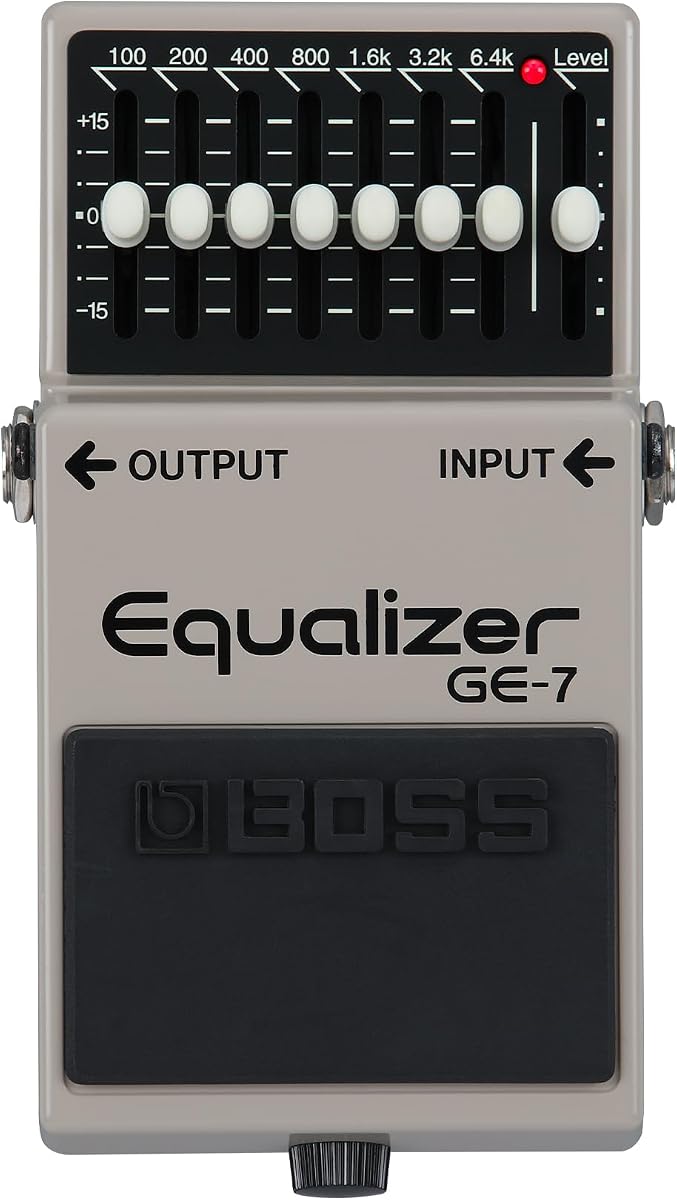
The BOSS GE-7 is a legendary pedal known for its reliability and clear tonal shaping. Although tailored for guitar its wide frequency range works well for bassists who want to boost mids to cut through dense mixes.
We may earn a commission when you buy through this link, at no additional cost to you.
It features seven bands of EQ sliders with a dedicated level control to adjust output volume. The 4.8 rating reflects its reputation as a workhorse that rarely fails. BOSS also backs this with a five-year warranty.
Some bassists might prefer a bass-specific model but the GE-7 offers superior build quality and standard 9V power compatibility. It is a premium option for those who value longevity and consistent performance over specific band counts.
Buy this if you need a trusted EQ that will last decades. It is ideal for players who want a simple and reliable tool to fix tone issues on the fly during live sets.
BOSS offers a five-year warranty which is rare in this category and shows confidence in the build.
The level slider lets you balance the pedal output volume independently from the EQ frequency changes.
We may earn a commission when you buy through this link, at no additional cost to you.
The STRICH 10-Band EQ offers a versatile ten-band solution that is easy to integrate into any setup. With a 4.2 rating it provides a clean signal path and smooth operation for various electronic instruments.
We may earn a commission when you buy through this link, at no additional cost to you.
It is built from aluminum alloy for durability but remains lightweight for easy travel. The sliders glide effortlessly allowing nuanced adjustments across ten independent frequency bands plus an overall master band for fine tuning.
The plus or minus twelve dB gain range is slightly less than some competitors but still sufficient for most tone shaping tasks. The main trade off is the lack of included power supply which adds to the total cost.
This is a great option for musicians who need maximum frequency control without a heavy footprint. It is best for practice sessions and small stages where weight and cost are key priorities.
An overall master band helps you fine tune the final output tone after setting individual frequency sliders.
The housing balances sturdiness with portability ensuring it survives transport without being overly heavy.
We may earn a commission when you buy through this link, at no additional cost to you.
This five-band bass EQ pedal is designed to save pedalboard space while delivering powerful tonal control. It features dedicated centers like 62.5Hz and 125Hz that are crucial for shaping bass frequencies accurately.
We may earn a commission when you buy through this link, at no additional cost to you.
The wide plus or minus eighteen dB range lets you tighten low-end response or boost mids for better mix presence. Its rugged metal housing ensures it lasts through live performances and rehearsals without damage.
With only five bands you have less fine tuning than ten-band units. However the specific bass frequencies make it efficient for quick adjustments. The lack of power supply is a standard trade-off for budget pedals.
Buy this if you need a simple space-saving EQ for funk rock or metal gigs. It is ideal for players who prefer quick broad strokes over detailed sculpting in complex mixes.
The rugged metal construction protects the internals while keeping the footprint small on crowded boards.
Eighteen dB of boost or cut allows for dramatic changes to your tone for different song sections.
We may earn a commission when you buy through this link, at no additional cost to you.
This five-band pedal offers a straightforward approach to tone shaping with essential bass frequencies. The full metal shell provides a solid and sturdy construction that protects the internal circuitry from physical damage.
We may earn a commission when you buy through this link, at no additional cost to you.
It includes a master level slider to control the output volume. The true bypass design ensures the signal remains fully intact during transmission without electric noise or loss of strength in the signal path.
The lower rating suggests some units may have build inconsistencies. However for a budget-friendly option it delivers transparent tone and wide gain range. Just remember to purchase a separate power adapter.
This is a viable option for students or beginners needing basic tone control. It is best for those who want a no-fuss pedal to fix muddy mixes without complex features.
A fully metal housing adds durability and resistance to wear and tear on busy stages.
The master slider lets you control the output level by plus or minus eighteen dB.
We may earn a commission when you buy through this link, at no additional cost to you.
The MXR Ten Band EQ offers unique dual outputs that let you run two separate signal chains. With a 4.6 rating it is a favorite for pros needing flexibility in live and studio setups.
We may earn a commission when you buy through this link, at no additional cost to you.
It provides ten different frequencies with a plus or minus twelve dB boost or cut per band. The LEDs are bright enough to see in direct sunlight so you can check status during a gig.
The eighteen-volt operation ensures increased headroom for clean signal processing. While expensive this pedal offers professional features rarely found in standard EQ units. It is a significant investment but worth it for reliability.
Buy this if you need advanced routing options and maximum signal integrity. It is ideal for professional sessions where dual outputs allow complex mix splitting for different amps.
Two outputs allow you to run stereo or parallel signal chains easily without extra splitters.
Operating at 18V provides extra voltage for cleaner tone and higher volume before distortion.
We may earn a commission when you buy through this link, at no additional cost to you.
The EROK EQ Pedal combines a ten-band equalizer with a standalone boost circuit for versatile tone shaping. With a 4.3 rating it offers precise control from 31.25Hz to 16kHz covering the full frequency spectrum.
We may earn a commission when you buy through this link, at no additional cost to you.
It features independent footswitches allowing three modes: EQ only, boost only, or both combined. This makes it a practical choice for live solos where you need to cut through the mix without changing EQ.
The LED indicators on sliders ensure quick visibility on dark stages. The low-noise circuit minimizes hum while preserving your instrument original raw tone when disengaged for true signal fidelity.
Buy this if you want a multi-function pedal that saves space and adds versatility. It is best for gigging musicians who need both tone shaping and a lead boost without extra pedals.
The boost function enhances input signal without unwanted tone coloration for lead solos and rhythm.
Separate switches for EQ and boost give you three flexible working modes for any scenario.
We may earn a commission when you buy through this link, at no additional cost to you.
Choosing the right equalizer pedal requires balancing your tonal needs with practical features. Consider these key factors to find the best fit for your style.
The number of bands determines how precisely you can shape your tone. Five-band units are simpler and save space while ten-band units allow detailed sculpting of specific problem frequencies. Ensure the frequency range covers your instrument low end and high notes effectively.
Look for pedals that cover standard bass ranges like 40Hz to 1kHz or wider if you play five or six-string instruments.
The boost and cut range tells you how much gain change each band can apply. A wider range like plus or minus 18dB offers more dramatic changes to your tone. This is crucial if you need to fix muddy mixes or enhance specific frequencies.
Select a pedal with at least plus or minus 15dB range to ensure enough flexibility for different genres and setups.
Pedals often face heavy use and physical stress so metal enclosures are preferred over plastic. Sturdy knobs and sliders ensure long life and reliable performance during live shows. Check user reviews for durability feedback before buying.
Prioritize models with solid metal housings and robust components if you gig frequently.
True bypass ensures that when the pedal is off your signal passes through unchanged. This maintains your instrument natural tone without coloration. Some pedals use buffered bypass which can degrade tone over long cable chains.
Always confirm the pedal uses true bypass switching to preserve signal integrity.
Some pedals offer independent footswitches for combined EQ and boost functions. This saves space on your board and adds versatility. Consider if you need multi-mode operation or just simple on/off toggling.
Look for dual footswitches if you want separate control over boost and EQ functions simultaneously.
Most pedals use standard 9V power but some premium models like MXR require 18V for extra headroom. Check if a power adapter is included or sold separately to budget accordingly. Ensure input and output jacks fit your existing setup.
Verify the voltage needs and check if you already have compatible power supplies before purchasing.
Compact pedals save valuable space on crowded pedalboards while larger ones often have more features. Measure your available space and consider how the size fits your overall setup. Lightweight models are easier to transport for touring.
Choose a size that balances features with portability based on your specific needs and gigging frequency.
A good warranty shows the manufacturer confidence in their product. Companies like BOSS offer five-year warranties which provide peace of mind. Check customer support availability if you encounter issues during use.
Prioritize brands with strong warranties and reliable customer service for long-term security.
Start by connecting the pedal between your bass and amplifier using standard instrument cables. Set all sliders to the middle position and engage the pedal to find your baseline tone.
Use the sliders to boost or cut frequencies. For a tighter low end cut 100Hz slightly and for more presence boost 1kHz. Always adjust the level knob to match your volume when bypassed.
Keep the pedal clean by wiping it down after gigs and avoid over-tightening sliders to prevent damage. Store it in a dry place and use a proper power supply to ensure longevity.
A bass equalizer pedal shapes your tone by boosting or cutting specific frequency ranges. This helps you fit your sound into a mix or fix issues like muddy low end. It acts like a tone knob on your bass but with more precise control.
Five bands are sufficient for basic adjustments like boosting mids or cutting bass. Ten bands offer more precise control if you need to target specific problem frequencies. Choose based on how much tone shaping you require.
Most pedals require a separate 9V DC power supply. Some premium models might need higher voltage like 18V. Always check the product specs and budget for the adapter if it is not included in the package.
True bypass preserves your natural tone when the pedal is off by creating a direct path. This is preferred for players who want to keep their instrument signal clean. Buffered pedals can color tone but may help with long cables.
Yes but guitar pedals often optimize frequencies that don't match bass ranges. Dedicated bass EQs handle lower frequencies better. However a good guitar EQ can still work if it covers the necessary bass frequencies.
A boost function increases the signal volume without changing the tone. This helps your bass cut through the mix during solos or loud sections. Some pedals combine EQ and boost into one unit for convenience.
Use a soft dry cloth to wipe the surface and sliders after each gig. Avoid liquids or harsh chemicals that could damage the electronics or knobs. Store it in a dry place to prevent corrosion or moisture damage.
Most pedals use external power so battery life is not a concern. However some older models use 9V batteries for convenience. Always unplug the power cable when not in use to prevent battery drain if applicable.
We highlighted the BOSS GEB-7 for overall reliability, the SONICAKE for budget value, and the MXR for professional features. Each option offers unique strengths depending on your specific needs and preferences.
Prioritize build quality and true bypass design to ensure your tone stays clean over time. If you need multi-functionality the EROK or MXR offer extra versatility for live performance.
Prices and availability change often so check current listings before making your final choice. Finding the right equalizer pedal can transform your low-end sound and help you cut through the mix effectively.